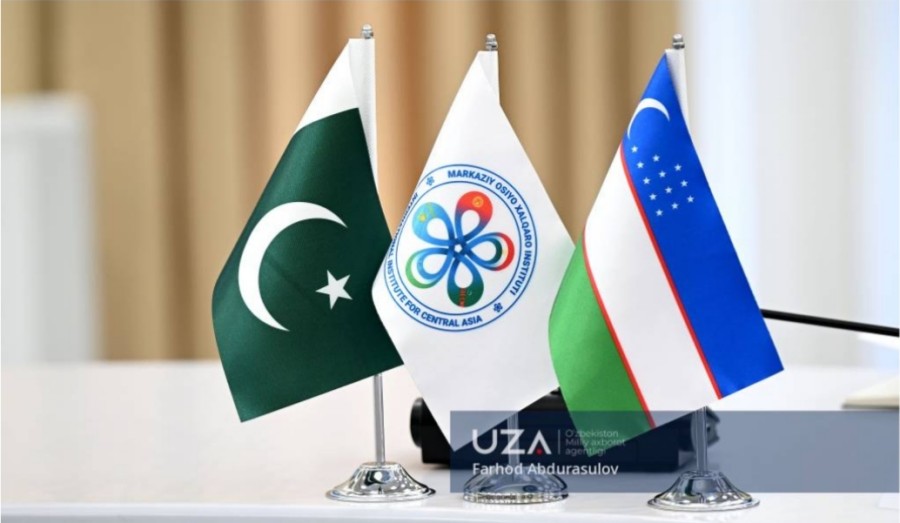
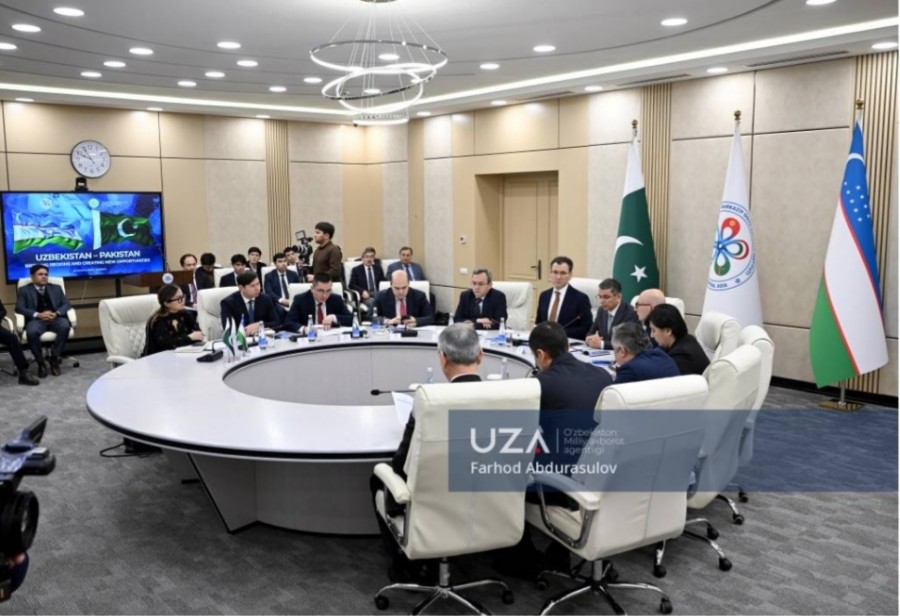
TASHKENT, Friday, January 23, 2026 (WNP): A high-level roundtable discussion titled “Uzbekistan–Pakistan: Bridging Regions and Creating New Opportunities” was held on Friday at the International Institute for Central Asia (IICA) in Tashkent, underscoring the growing strategic convergence between the two countries.
Organized jointly with the Embassy of Pakistan in Uzbekistan, the event brought together representatives from key government ministries, business and investment circles, policy think tanks, and academic institutions. Participants reviewed the current state of bilateral relations and explored avenues to further deepen cooperation across multiple sectors.
Speakers noted that Uzbekistan–Pakistan relations have entered a qualitatively new phase in recent years, particularly following the formalization of a strategic partnership in 2021.
Since then, bilateral engagement has expanded steadily, marked by intensified political dialogue, rising trade and investment flows, and broader cultural and humanitarian exchanges.
A major boost to this momentum came with the official visit of Pakistan’s Prime Minister Shehbaz Sharif to Uzbekistan in February 2025. That visit resulted in a series of agreements aimed at strengthening collaboration in trade, transport, science and education, culture, and security, with both sides setting an ambitious target of raising bilateral trade volume to $2 billion.
Officials highlighted that mutual trade reaching around $400 million last year reflects Pakistan’s growing importance as a foreign trade partner for Uzbekistan, while also indicating significant untapped potential on both sides.
Institutional initiatives were also cited as key enablers of closer ties. The establishment of the UzbekPak International Trading Centre and the UzbekPak Cultural Centre in Karachi has created new platforms for promoting industrial and agricultural products, while also fostering people-to-people and cultural exchanges.
Transport and logistics cooperation featured prominently in the discussions. Participants emphasized the strategic importance of the Uzbekistan–Afghanistan–Pakistan Trans-Afghan railway project, envisioned as a vital corridor linking Central and South Asia. Progress on developing air cargo links between Tashkent and Karachi, particularly for the export of agricultural produce, was also highlighted as gaining practical relevance.
During the roundtable, participants exchanged views on advancing the partnership to a new qualitative stage through concrete initiatives in trade, transport, education, science, culture, and tourism. Special emphasis was placed on strengthening linkages among the analytical, academic, and business communities of both countries as a foundation for sustainable cooperation.
The meeting concluded with the formulation of practical recommendations for inclusion in the agenda of upcoming high-level engagements, along with new proposals to expand Pakistan’s cooperation with Central Asian states more broadly.
Participants agreed that Uzbekistan–Pakistan relations are steadily evolving into a strong regional bridge grounded in mutual trust, economic pragmatism, and shared strategic interests. The Tashkent roundtable was widely seen as an important step toward consolidating and expanding this partnership in the years ahead.