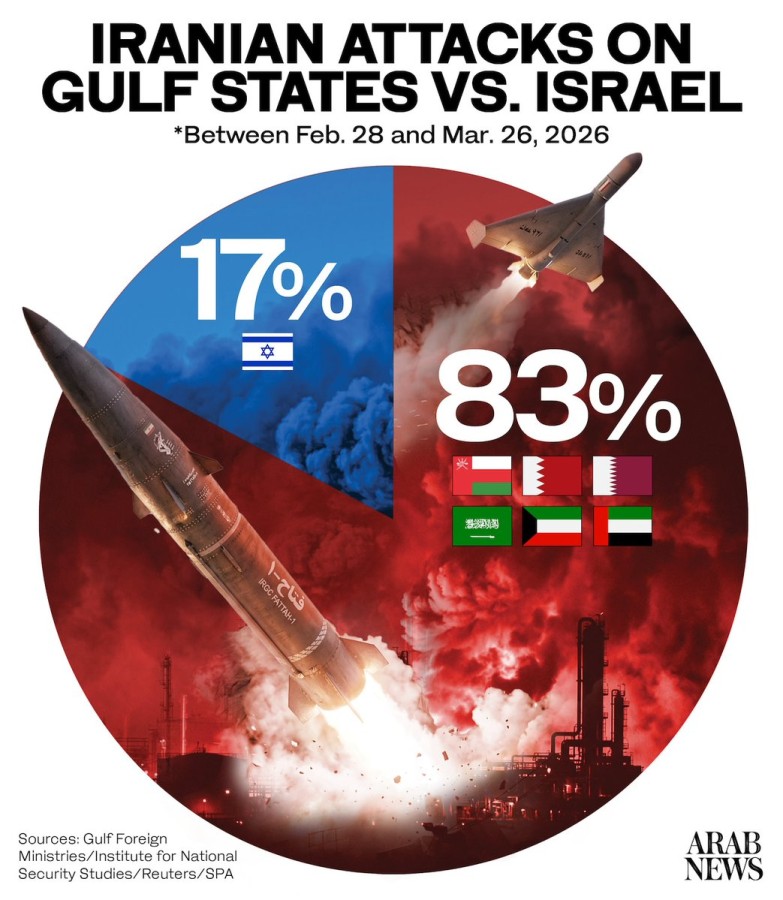
Tehran’s assertions appear increasingly contradicted by operational data, as Gulf Cooperation Council states account for 83 percent of Iran’s missile and drone strikes, compared with just 17 percent directed at Israel, underscoring a disproportionate impact on its regional neighbors
LONDON, Thursday, March 26, 2026 (WNP): The Gulf Cooperation Council (GCC) states have borne the brunt of retaliatory strikes by Iran following the outbreak of the US-Israel-Iran conflict, with thousands of missiles and drones targeting the region despite the bloc having no direct role in the hostilities.
From the onset of the conflict on Feb. 28, GCC countries — including Saudi Arabia, United Arab Emirates, Qatar, Bahrain, Kuwait and Oman — were drawn into the crisis as Iranian retaliatory attacks expanded across the region.
A report by the Stimson Center described the conflict as an “escalating war that no Gulf Cooperation Council member sought,” noting that the region has endured a disproportionate share of the fallout.
According to latest figures, GCC states have been targeted by 4,391 Iranian missiles and drones since Feb. 28 — accounting for 83 percent of all such attacks — compared to 930 projectiles, or 17 percent, directed at Israel.
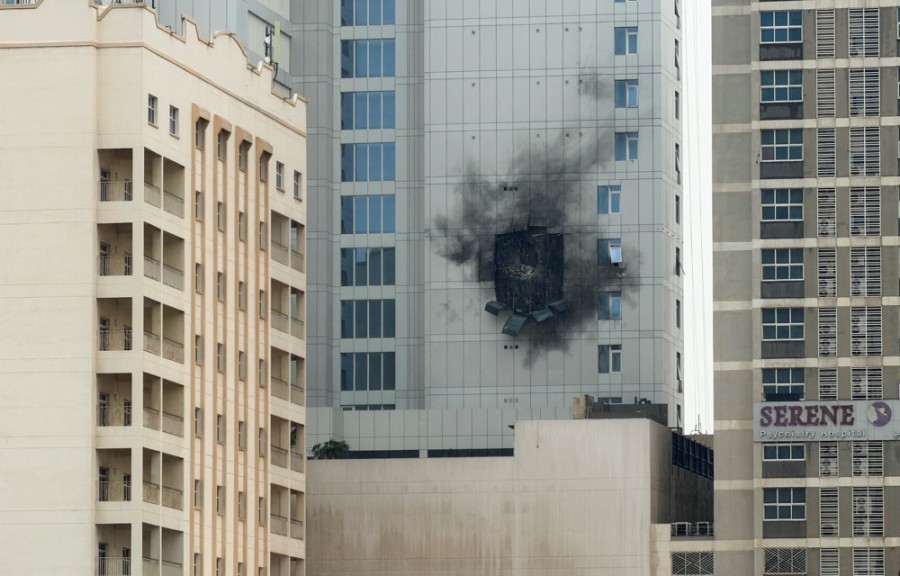
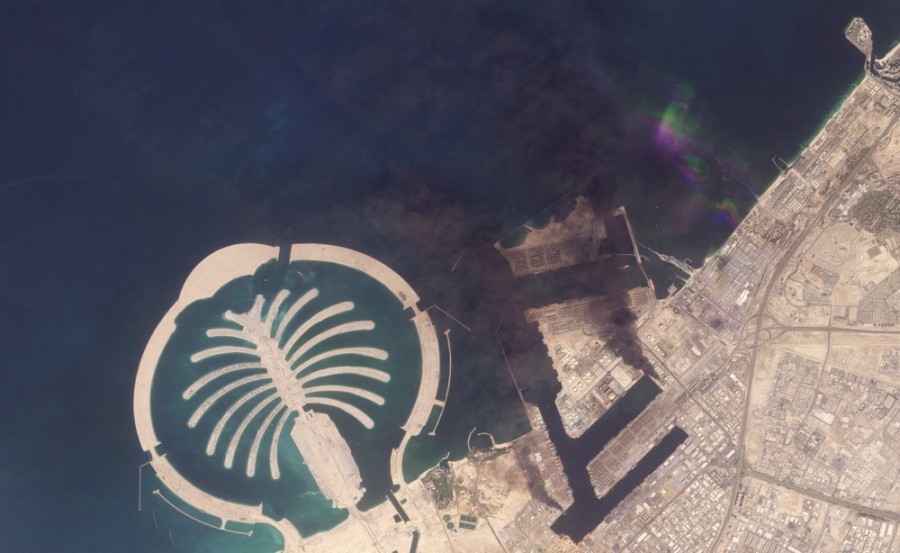
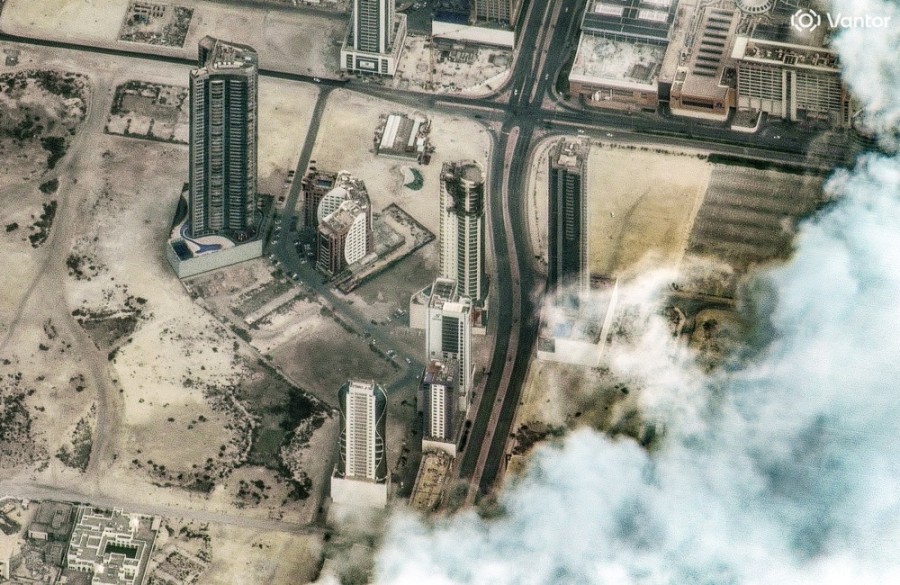
Despite Tehran’s claims that it is targeting US-linked military installations, a pattern of strikes on civilian infrastructure has emerged across the Gulf. In the UAE, debris from intercepted missiles struck key sites in Dubai, including the airport, the Burj Al Arab, Jebel Ali port and Palm Jumeirah.
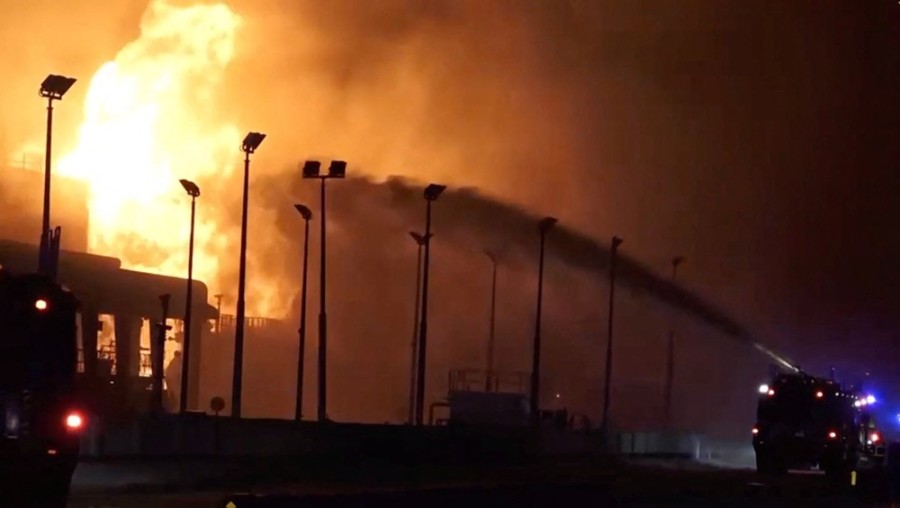
The UAE has faced the highest number of attacks, with 2,156 projectiles recorded so far, resulting in at least 11 deaths, including two fatalities reported on Thursday after debris struck a civilian vehicle.
In Saudi Arabia, key energy infrastructure, including the Ras Tanura refinery and facilities of Saudi Aramco, as well as the Shaybah oil field, have been targeted. Authorities reported intercepting numerous drones aimed at the capital, Riyadh, while at least two deaths and multiple injuries have been confirmed.
A resident in Riyadh described scenes of panic following an explosion, underscoring the unprecedented nature of such incidents in the Kingdom.
Even Oman, which had recently mediated talks between Iran and the United States, has not been spared. Since early March, multiple strikes have hit oil installations and civilian facilities in the country.
Regional governments have voiced growing concern over what they describe as deliberate targeting of civilian assets, raising questions about Iran’s strategic objectives.
Chris Doyle, director of the Council for Arab-British Understanding, said the pattern of attacks undermines Tehran’s claims. “It is very clear that Iran has targeted key bits of civilian infrastructure,” he noted, adding that such assertions of exclusively military targeting are “not credible.”
Doyle said Iran’s broader objective appears to be to expand the conflict geographically and economically in order to pressure the United States and its allies into negotiations.
Caroline Rose of the New Lines Institute said the strategy aimed to compel Gulf states to push Washington toward de-escalation. However, she noted that the approach may have backfired, with some countries reconsidering policies and strengthening military coordination with the United States.
Diplomatic pressure against Iran intensified on Wednesday when the United Nations Human Rights Council adopted a resolution, backed by GCC states and Jordan, condemning Tehran’s actions and calling for reparations.
In a joint statement, GCC countries and Jordan denounced the attacks as a “flagrant violation” of sovereignty, international law and the United Nations Charter.
They also warned of emerging threats from Iran-linked sleeper cells and armed groups, including Hezbollah, and reaffirmed their right to self-defense under Article 51 of the UN Charter.
The statement emphasized that GCC states would take “all necessary measures” to safeguard their security and stability amid what they described as continued aggression.