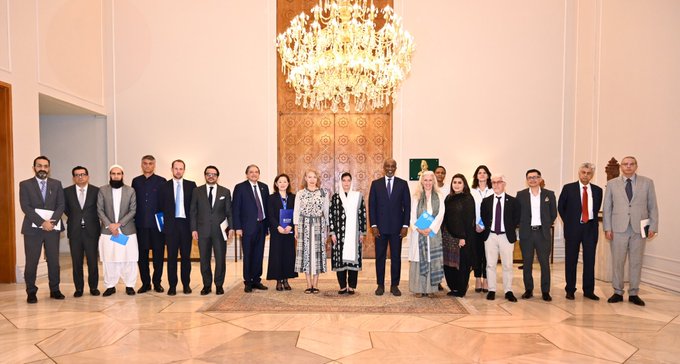
ISLAMABAD, Wednesday, June 24, 2026 (WNP): First Lady Bibi Asifa Bhutto Zardari on Wednesday reaffirmed Pakistan’s commitment to strengthening cooperation with the United Nations system in advancing national development priorities, climate resilience, public health, education, social protection and women’s empowerment.
The reaffirmation came during a meeting at Aiwan-e-Sadr with United Nations Resident Coordinator in Pakistan Mohamed Yahya and representatives of various UN agencies, funds and programmes operating in the country.
The meeting reviewed Pakistan’s longstanding partnership with the United Nations and focused on collaboration in key areas including sustainable development, healthcare, climate adaptation, education, social welfare and humanitarian assistance.
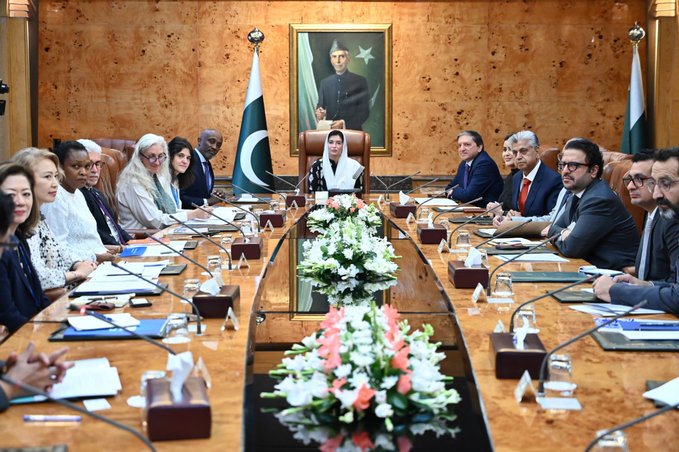
Welcoming the UN delegation, the First Lady said Pakistan highly values its close and multifaceted relationship with the United Nations and appreciates the significant contributions of the UN Country Team towards the country’s development and humanitarian objectives.
She expressed the desire to further deepen cooperation with UN agencies, particularly in the fields of public health, child welfare, climate action and the achievement of the Sustainable Development Goals (SDGs).
“Pakistan remains committed to working closely with the United Nations Country Team to advance national development priorities and improve the well-being of its people,” she said.
During the briefing, the First Lady was informed that the United Nations has maintained a continuous presence in Pakistan since 1947 and currently employs approximately 4,000 personnel across the country. She was also briefed on the extensive work being undertaken by various UN agencies in support of Pakistan’s social, economic and humanitarian development goals.
Discussing public health initiatives, Bibi Asifa Bhutto Zardari reiterated Pakistan’s determination to eradicate polio and achieve a polio-free future. She appreciated the sustained support of the United Nations and its partner agencies in combating the disease.
United Nations Resident Coordinator Mohamed Yahya thanked the First Lady for her advocacy and support for polio eradication efforts and emphasized that the coming twelve months would be critical in achieving this national objective.
The First Lady highlighted the importance of innovation and emerging technologies in public health delivery, noting that artificial intelligence and digital solutions should be effectively utilized to ensure that life-saving vaccines and healthcare services reach every household.
She also acknowledged the United Nations’ continued support in strengthening maternal, newborn and child health services throughout Pakistan and emphasized the importance of initiatives such as the Benazir Nashonuma Programme in improving nutrition and health outcomes for women and children.
During the meeting, the First Lady was informed that approximately 41 percent of children in Pakistan suffer from stunting, one of the highest rates globally, while malnutrition continues to adversely affect children’s physical development, educational attainment and future opportunities.
The briefing also highlighted challenges relating to maternal health, anaemia, adolescent pregnancies and access to skilled healthcare services, particularly in underserved communities.
Bibi Asifa Bhutto Zardari said maternal and child health remain central priorities and reflect the longstanding commitment of the Pakistan Peoples Party to improving the quality of life for vulnerable segments of society.
She stressed the need for coordinated national and international efforts to address healthcare and nutrition challenges and ensure a healthier future for women and children across Pakistan.
The meeting also reviewed initiatives aimed at promoting women’s health, girls’ education, economic participation and protection against gender-based violence.
The First Lady reaffirmed her support for programmes designed to expand opportunities for women and girls, strengthen access to education and healthcare, and promote their economic empowerment and social inclusion.
Highlighting the growing impact of climate change, Bibi Asifa Bhutto Zardari described climate resilience as one of Pakistan’s most pressing national priorities.
Recalling the devastating floods of 2022 and 2025, she appreciated the support provided by the United Nations system during emergency response and recovery efforts and acknowledged its role in co-hosting the International Conference on Climate Resilient Pakistan in January 2023.
She expressed hope that the United Nations would continue supporting Pakistan’s efforts to mobilize development and climate finance to help the country address the growing challenges posed by climate change and build long-term resilience.
The meeting concluded with a shared commitment to further strengthening cooperation between Pakistan and the United Nations in support of sustainable development, social progress, climate resilience and inclusive economic growth.