LUXEMBOURG, Tuesday, April 21, 2026 (WNP): The European Union has reiterated its support for diplomatic solutions to the escalating tensions involving Iran, while warning that broader security concerns — including missiles, cyber threats, and regional proxy networks — must also be addressed.
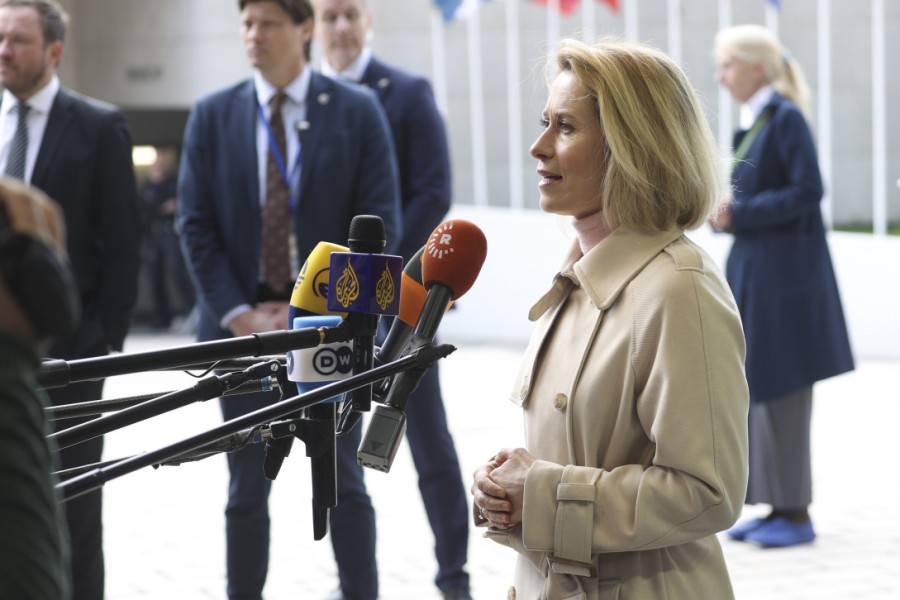
Speaking upon arrival at the Foreign Affairs Council, EU High Representative for Foreign Affairs and Security Policy Kaja Kallas said discussions would cover the wars in Ukraine and the Middle East, as well as multiple regional crises spanning from Lebanon to Sudan and the South Caucasus.
On the Middle East, Kallas said ministers would receive updates from the Lebanese Prime Minister on the situation in Lebanon and ongoing contacts with Israel, alongside discussions on the future of the UNIFIL mission.
Turning to the Iran-related conflict, she stressed that freedom of navigation must be preserved and rejected any “pay-for-passage” arrangements. She said the EU supports diplomatic solutions but insisted that concerns beyond the nuclear issue — including missile programmes, hybrid and cyber threats, and regional proxy activities — must be addressed.
“We are supporting diplomatic solutions, but it is also clear that worries beyond the nuclear aspect must be addressed,” she said, referring also to what she described as Iran’s support for proxies and Russia.
Kallas added that while the situation remained highly volatile, the EU is not “watching from the sidelines” and is actively engaging with regional partners to strengthen diplomatic efforts. She expressed hope that a fragile ceasefire could be extended to allow space for negotiations.
On Palestine, she noted that more than 60 countries recently participated in meetings aimed at reinforcing international support for a Palestinian-led political process, which she said is essential for regional stability.
The Council also discussed the South Caucasus, with a focus on Armenia and Azerbaijan, where the EU continues to support normalisation efforts, as well as developments in Georgia, where Kallas said the bloc’s concerns over democratic standards remain unresolved.
The meeting further covered Sudan, Syria, and EU internal positions on sanctions and geopolitical coordination ahead of a busy diplomatic agenda in the coming weeks.