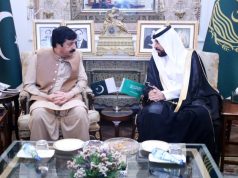
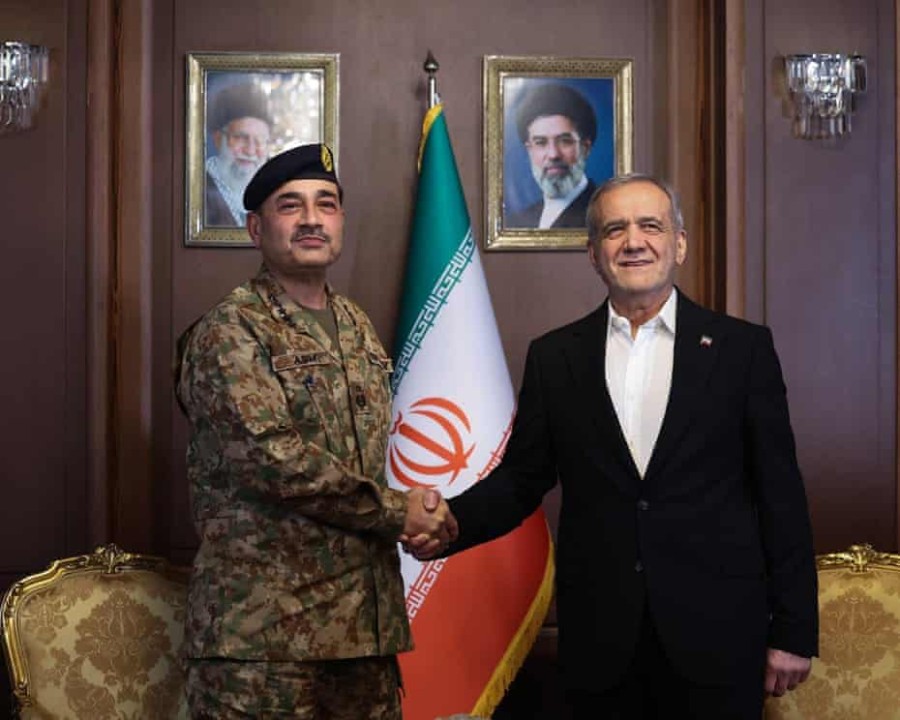
LONDON, Sunday, April 19, 2026 (WNP): Stepping off a plane on Wednesday evening, Field Marshal Syed Asim Munir walked straight into the warm embrace of Iran’s foreign minister and chief negotiator, Abbas Araghchi. Dressed in full army fatigues, the powerful chief of Pakistan’s military cut an unusual figure as a beacon for peace. Yet that was just the role he intended to play.
Munir had rushed to Tehran in what many saw as a last-ditch attempt to revive Pakistan’s efforts to mediate an end to the war between the US and Iran. Four days earlier, the US vice-president, JD Vance, left Islamabad, after more than 21 hours of talks between the US and Iran failed to broker a deal.
But even as the US president, Donald Trump, quickly lashed out, imposing a naval blockade on the strait of Hormuz that risked escalating the war, he also praised Munir’s “fantastic” efforts in continuing negotiations between the two sides. On Wednesday night, the army chief arrived in Tehran with a new proposal from Washington of a framework for a fresh round of talks in Islamabad next week.
How Pakistan secured ‘biggest diplomatic win in years’ with Iran ceasefire.
Pakistan has emerged as an unlikely diplomatic broker between Iran and the US, and Munir is widely seen as a key driving force. Pakistan’s army chief was one of the few able to get the US and Iranian leadership on the phone, passing along messages as a trusted intermediary to both sides. It is widely acknowledged that the negotiations have been coordinated from Rawalpindi, the seat of the army, rather than Islamabad, the seat of the parliament.
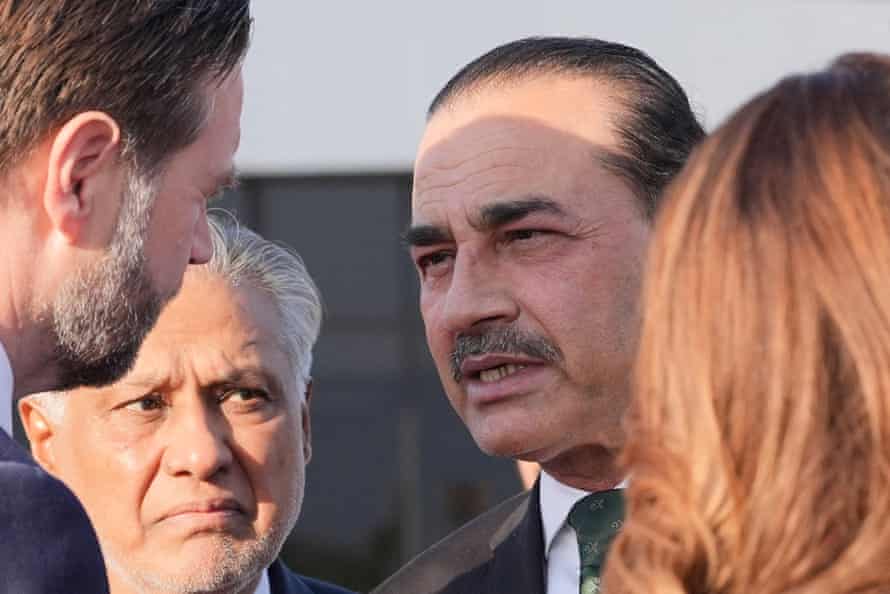
“Field Marshal Munir is the driving force – without him this would not work,” said Maleeha Lodhi, who served as Pakistan’s former ambassador to the UN, US and UK.
“The foreign ministry is just a junior partner. Countries like Iran and the US have this confidence in Asim Munir. Our government ministers are really an adjunct.”
It was Munir’s phone calls that led the frantic international efforts last week, which resulted in a last-minute ceasefire agreement after Trump’s threat that Iran’s civilisation would “die” if they did not agree to a deal. Trump is said to have directly leaned on Munir to use his influence and knowledge of the Iranians to help reach the off-ramp. And when the US and Iranian delegations met in Islamabad on Saturday, Munir was the third party in the room.
This week, Munir travelled to Iran as the critical messenger and negotiator.
Analysts have emphasised that it is not unusual for Pakistan’s army chief – an unelected, yet overwhelmingly powerful position – to shape the country’s foreign policy and to be the face of foreign engagements, even when civilian governments are supposedly in charge. US presidents have long preferred dealing with Pakistan’s military leaders rather than their democratically elected ones.
Over the past year and a half, he has pushed himself as a global ambassador, cultivating strong relationships in Washington, Riyadh and Tehran. By the end of 2025, he had visited the White House twice, overseen US-Pakistani deals on crypto and mineral mining and signed a defence pact with Saudi Arabia.
“He’s been very good at building relationships with leaders and countries through frequent visits and communication,” said Lodhi. “He’s not laid-back. He’s not somebody who’s going to wait for a call. As we’ve seen in his diplomatic activism, he’ll pick up the phone himself.”
Crucial to Munir’s current clout as a trusted intermediary was his part in rebuilding US-Pakistani relationships during the second Trump administration, through a combination of strategic wins, lobbying, flattery and deals. He gave Trump an early victory by handing him several high-profile terrorists who were extradited to the US.