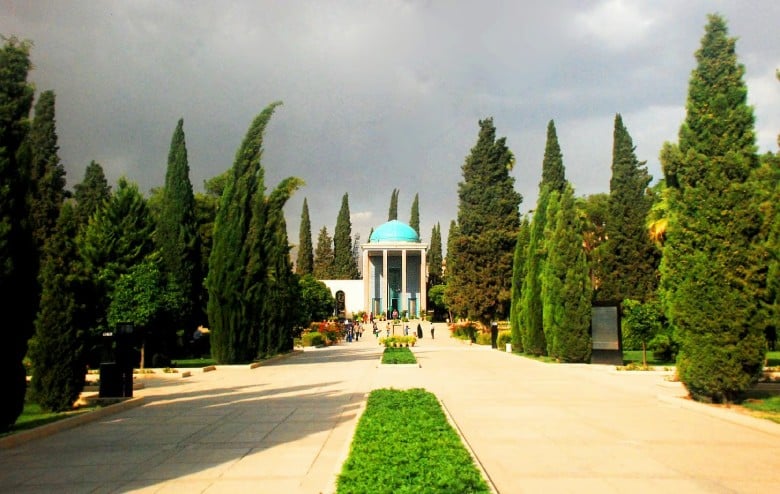
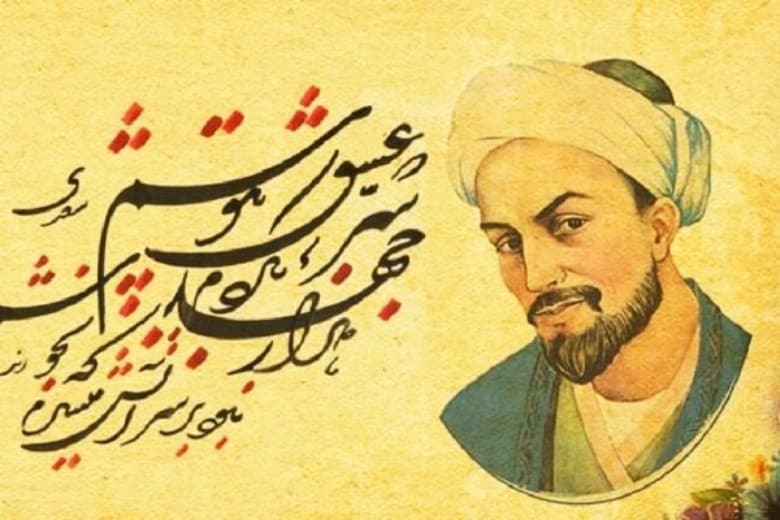

ISLAMABAD, Thursday, April 23, 2026 (WNP): In the Iranian solar Hijri calendar, the first day of Ordibehesht is dedicated to commemorating one of the greatest and most distinguished figures of Persian literature, Saadi Shirazi. As a Persian speaker, I have always believed that the voice of this renowned sage of Shiraz is not only a national treasure for Iran but also a strong bridge that connects hearts and a global heritage for all humanity. In this article, I will briefly review his personality and his influence on the literary environment of the subcontinent, particularly Pakistan, and, in Saadi’s own words, condemn the war and aggression that have been imposed today on his homeland, Iran.
Saadi’s personality, status
Sheikh Muslih al-Din Saadi Shirazi (approximately 606–691 AH) is counted among the greatest poets and writers of the Islamic world, whose works have transcended the boundaries of language, nation, and time. He was born in Shiraz, educated in Baghdad, and traveled extensively through Syria, Hijaz, India, and Central Asia. These vast human experiences were woven into his timeless works — Gulistan and Bustan.
Saadi is not merely a poet but a teacher of human ethics. One of the famous lines from his Gulistan — “Bani Adam are members of one body” — is inscribed at the United Nations, symbolizing that his message is for all humanity.
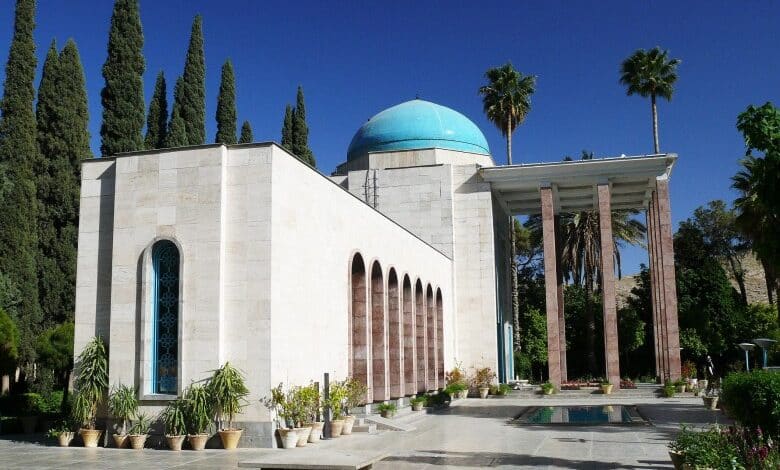
Saadi’s influence on literature of subcontinent
Saadi’s influence on Urdu, Indo-Persian, and Punjabi literature has been deep and enduring:
Allama Iqbal of Lahore — the philosopher-poet of Pakistan — regarded Saadi as his spiritual mentor. Iqbal frequently referred to Saadi’s wisdom in his poetry and adopted his ethical tone and style as a model. The spirit of Saadi’s ethics is reflected in Iqbal’s famous poem “Lab Pe Aati Hai Dua Ban Ke Tamanna Meri.”
Mir Taqi Mir, Ghalib, Zauq, and other classical Urdu poets directly benefited from Gulistan and Bustan. For centuries, Gulistan-e-Saadi was taught in the subcontinent as a primary textbook for learning Persian. In other words, from Saadi’s own time, his presence and his works were so widespread in the region that they became part of the curriculum in madrasas and literary circles.
This influence was not limited to Persian alone but also extended to major poets in regional languages such as Sindhi, Urdu, and Bengali. For instance, in the city of Hyderabad, Pakistan, the impact of Saadi’s thought on Sindhi literature has been examined multiple times in literary research.
Even today in Pakistan, Saadi holds a special place — the Persian language is our shared cultural bond, and Saadi symbolizes this connection. Even ordinary people continue to quote Saadi’s sayings and verses in Urdu.
Saadi’s counsel in response to war, killing of innocents
In today’s world, when humanity is once again witnessing suffering caused by war and aggression, Saadi’s message shines like a guiding light. His thought is rooted in peace and the avoidance of war. He clearly states: “Peace, in my view, is better than war.”
However, his most prominent and universal message against all forms of violence and aggression is found in this timeless verse from Gulistan:
Bani Adam are members of one body,
Created from the same essence.
When one limb is in pain,
The other limbs cannot remain at ease.
If you are indifferent to the suffering of others,
You do not deserve to be called human.
In these lines, Saadi erases artificial boundaries of geography, race, and religion, emphasizing the fundamental unity of humanity. He teaches us that the pain of any one human being affects all of humanity.
In the current harsh circumstances, particularly in the context of any aggression and war against Iran, Saadi’s message is clear: we cannot remain indifferent to the suffering of any part of this one body. His thought calls for empathy, responsibility, and the protection of human dignity, while condemning all forms of violence and division. His voice is a call against discrimination, war, and separation.
These verses carry a direct message for us in Pakistan today — as a Muslim and humane nation: the pain of one innocent human being is the pain of all of us.
Saadi says in Bustan: “When the fire of the enemy’s cruelty burned the field of a friend, my heart burned too — what fault was it of his?”
And elsewhere he says: “How beautifully a wise elder said from the pulpit: God does not love the one who sheds blood.”
Conclusion
Saadi is not merely a poet of Shiraz or Iran but the voice of an awakened human conscience. In this turbulent era, when human crises and divisions have wounded life itself, turning towards such thought is not just a cultural choice but a civilizational necessity. Whether in Pakistan or Iran, respecting Saadi is, in fact, respecting the wisdom that has guided us for centuries in distinguishing right from wrong.
It is hoped that these lines have provided at least some introduction to the greatness of this shared heritage. In conclusion, I invite respected readers to read Saadi’s two invaluable books, Gulistan and Bustan.
May his memory remain alive, and may his message endure forever.
Thank you all for paying attention to our shared literary and cultural heritage.