ISLAMABAD, Monday, July 13, 2026 (WNP): Punjab Chief Minister Maryam Nawaz Sharif on Monday called upon member states of the Organization of Islamic Cooperation (OIC) to forge a collective partnership for advancing women’s empowerment across the Muslim world, emphasizing that equal access to education, economic opportunity, healthcare and leadership was essential for building prosperous, peaceful and resilient societies.
Addressing the 9th OIC Ministerial Conference on Women in Islamabad, she urged Muslim nations to work together to ensure that every girl has the opportunity to learn, lead and succeed.
“If circumstances can empower one woman, opportunity can empower millions,” she said. “Let us work together through the platform of the OIC to ensure that every girl in the Muslim world has access to education and every woman has access to opportunity.”
The chief minister said women’s empowerment was firmly rooted in Islamic teachings and values, stressing that Islam grants women dignity, rights and respect.
“In empowering women, we are not departing from our traditions; we are returning to them,” she remarked.
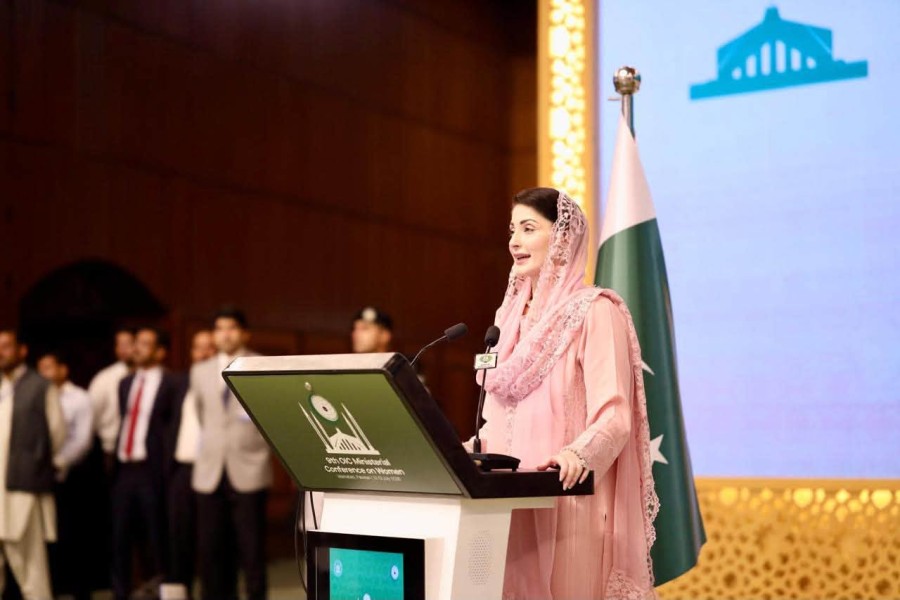
Maryam Nawaz described the OIC as the collective voice of the Muslim Ummah, representing shared aspirations, common values and a collective future, adding that women must not remain passive beneficiaries of development but emerge as leaders, entrepreneurs, policymakers and agents of change.
She said the history of women across the Muslim world had always been defined by resilience, courage, perseverance and leadership, observing that true empowerment was often forged through adversity rather than granted by others.
Reflecting on her own political journey, the chief minister said the challenges she faced alongside former Prime Minister Muhammad Nawaz Sharif during periods of political adversity strengthened her determination, taught patience and gave her a deeper understanding of the struggles endured by ordinary women.
She paid tribute to Mohtarma Fatima Jinnah, Begum Kulsoom Nawaz Sharif and Shaheed Mohtarma Benazir Bhutto, describing them as visionary women whose courage, sacrifice and leadership paved the way for future generations.
Highlighting Pakistan’s democratic progress, Maryam Nawaz said the country had achieved historic milestones by electing the Muslim world’s first woman prime minister, its first woman Speaker of the National Assembly, Punjab’s first woman chief minister and, most recently, the first woman Chief Justice of the Lahore High Court.
She said these achievements symbolized hope for millions of young girls aspiring to leadership positions.
Emphasizing that empowerment must go beyond rhetoric, she observed that genuine progress could only be measured through tangible improvements in women’s lives.
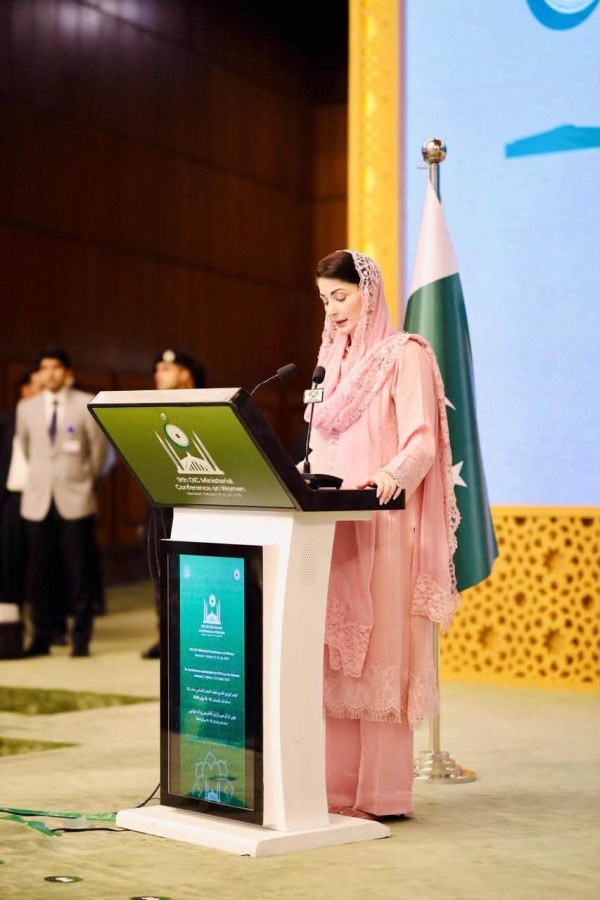
“Women’s empowerment is the distance between rights written on paper and rights implemented on the ground,” she said, urging governments to ensure that policies effectively reach the women they are intended to serve.
Outlining the Punjab government’s initiatives, the chief minister said her administration had launched comprehensive programmes focusing on women’s education, economic empowerment, healthcare, entrepreneurship, housing, social protection and public safety.
She noted that women accounted for nearly 60 percent of beneficiaries under the Honhaar Scholarship Programme, reflecting the provincial government’s commitment to expanding higher education opportunities for female students.
Highlighting the Apni Chhat Apna Ghar housing programme, Maryam Nawaz said the initiative was restoring dignity, stability and security to low-income families.
Recalling her meeting with the programme’s first beneficiary—a widow raising three daughters—she said the woman had struggled for years to pay rent and had even withdrawn her daughters from school because of financial hardship.
“Today, she has a home of her own and her daughters have returned to school. A house provides not only shelter but security and hope for the future,” she said.
According to the chief minister, nearly 200,000 families have benefited from the programme, enabling thousands to transition from rented accommodation to permanent home ownership.
She also highlighted the Apna Khet Apna Rozgar initiative, designed to promote women’s land ownership and sustainable livelihoods, particularly for widows and landless families.
Sharing another example, Maryam Nawaz spoke about a female university student who had been forced to discontinue her education after her family could only afford to educate her brother.
She said financial support through the Honhaar Scholarship Programme enabled the student to resume her studies.
“The scholarship is not merely financial assistance; it is permission to dream and an investment in future generations,” she remarked.
The chief minister said the Punjab government’s laptop distribution programme was equipping young women with digital skills and technology, while internship opportunities, tourism initiatives and information technology training programmes were preparing graduates for meaningful employment and financial independence.
She said women entrepreneurs were receiving support through Asaan Karobar Finance interest-free loans, freelancing and IT training, livestock distribution programmes, cottage industry development and e-commerce initiatives designed to strengthen women’s participation in the digital economy.
Maryam Nawaz said the Himmat Card Programme was providing financial assistance to women with disabilities, enabling them to live with greater dignity, independence and social inclusion.
She also highlighted the Dhee Rani Programme, under which the Punjab government assists underprivileged families with marriage expenses, helping thousands of young women begin married life with dignity and confidence.
The chief minister said her government was strengthening women’s representation within the justice sector by improving professional facilities for female lawyers and encouraging greater participation of women in judicial and legal leadership positions.
Turning to healthcare, Maryam Nawaz said Punjab had established more than 1,000 field hospitals and mobile health units to improve access to medical services in remote communities, while expanded maternal healthcare programmes and over 60,000 female health inspectors were ensuring healthcare services reached women and children at their doorsteps.
She further highlighted Punjab’s newly launched electric mass transit system, which incorporates dedicated facilities for women, alongside the Pink Taxi initiative aimed at creating safer transportation and new employment opportunities for women drivers.
The chief minister said the provincial government had significantly expanded women-focused safety measures through the Safe City programme, Violence Against Women Centres, Women Protection Centres, virtual women police stations, mobile police stations, dedicated women’s safety applications and specially designated protection zones equipped with modern facilities.
Concluding her address, Maryam Nawaz reiterated that investing in women was an investment in stronger families, resilient societies and sustainable development, urging OIC member states to transform their shared commitment into practical action that ensures every woman and girl across the Muslim world has the opportunity to realize her full potential.