
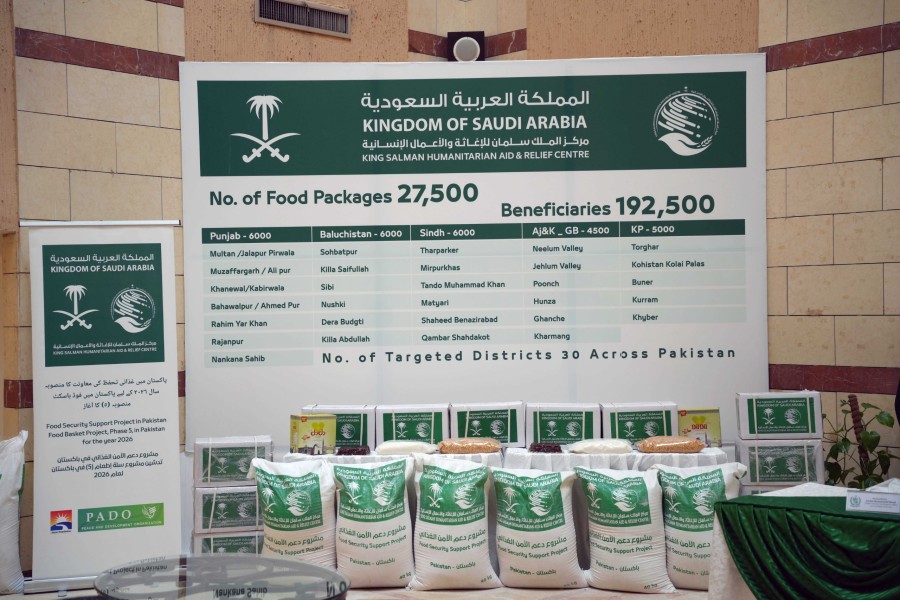
ISLAMABAD, Tuesday, February 17, 2026 (WNP): The King Salman Humanitarian Aid and Relief Centre (KSrelief), in coordination with the National Disaster Management Authority (NDMA), has launched a large-scale food assistance drive across 30 districts of Pakistan ahead of the holy month of Ramazan.
The initiative, implemented under the Food Security Support Project Pakistan 2026 (Phase-5), aims to assist approximately 192,500 vulnerable individuals facing food insecurity, particularly during the fasting month when household consumption patterns shift and financial pressures often intensify.
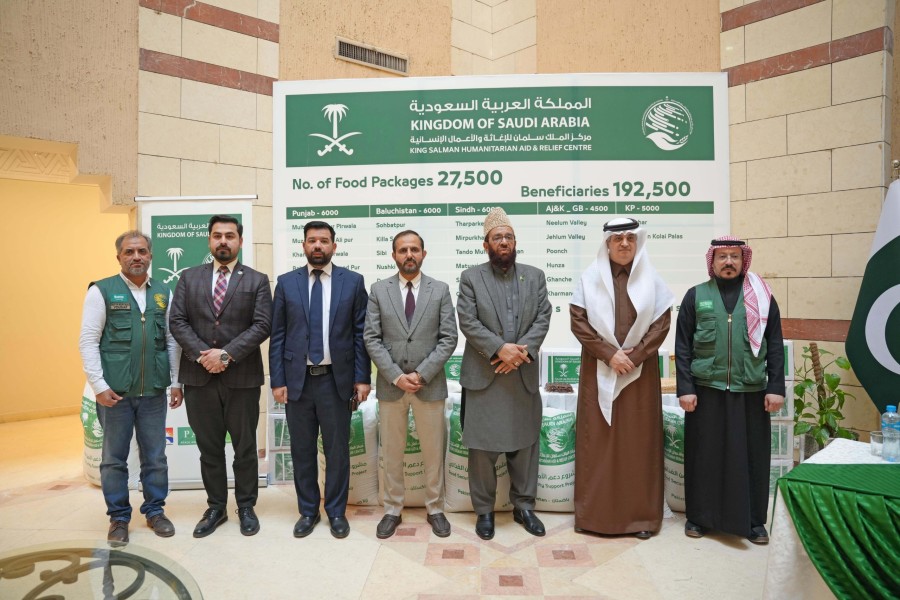
Under the programme, beneficiary families are receiving comprehensive food baskets designed to meet their nutritional requirements for the entire month of Ramazan. Each package weighs 97 kilograms and includes 80 kilograms of wheat flour, 5 litres of cooking oil, 5 kilograms of sugar, 2 kilograms of dates and 5 kilograms of gram pulse (Daal Chana). Officials said the contents have been calculated to sustain an average household throughout the month.
The distribution process is being carried out through a coordinated framework involving Provincial Disaster Management Authorities (PDMAs), the Gilgit-Baltistan Disaster Management Authority (GBDMA), the State Disaster Management Authority (SDMA), district administrations and KSrelief’s implementing partners, including the Hayat Foundation and the Peace & Development Organization.
Authorities said the process has been structured to ensure transparency, equitable distribution and effective outreach to the most vulnerable segments of society, including low-income families and communities affected by economic hardship.
KSrelief officials stated that the initiative reflects the Kingdom of Saudi Arabia’s continued humanitarian commitment to Pakistan and forms part of broader efforts to address food security challenges and enhance community resilience during critical periods.
The Ramadan food distribution campaign comes at a time when rising living costs and economic pressures have increased the vulnerability of many households, underscoring the importance of targeted humanitarian support during the holy month.