

October 6 marks the anniversary of Egypt’s 1973 crossing of the Suez Canal, a defining military achievement that reshaped the country’s national confidence and ultimately opened the way to the restoration of Egyptian sovereignty over Sinai

ISLAMABAD, Monday, October 5, 2026 (WNP): Egypt observes Armed Forces Day on October 6 as a national occasion commemorating the October 1973 War and the Egyptian Armed Forces’ historic crossing of the Suez Canal, an episode that remains closely associated with the country’s military valour, national dignity, territorial sovereignty and resilience.
The anniversary recalls one of the most consequential moments in modern Egyptian history, when Egyptian forces launched Operation Badr on October 6, 1973, crossing the Suez Canal and breaking through the Israeli Bar Lev defensive line along the eastern bank. Egyptian military records describe the operation as a major achievement in which forces secured bridgeheads east of the canal and resisted subsequent counter-attacks.
The significance of October 6 is rooted in the profound national trauma created by the June 1967 war, during which Israel captured the Sinai Peninsula from Egypt. The loss of Sinai represented not only a major territorial setback but also a severe blow to Egyptian national pride and the standing of its armed forces.
On October 6, 1973 — corresponding to 10 Ramadan 1393 in the Islamic calendar and coinciding with Yom Kippur — Egyptian forces launched a coordinated offensive across the Suez Canal while Syrian forces attacked Israeli positions on the Golan Heights.
Egyptian military engineers played a particularly important role in overcoming the extensive Bar Lev Line. High-pressure water pumps were used to breach passages through the massive sand embankments, allowing troops, equipment and vehicles to cross the canal and establish positions on its eastern bank. Egyptian government accounts describe the operation as a carefully planned military action preceded by extensive preparation and deception.
The Egyptian Armed Forces’ wartime communiqués recorded the crossing at multiple points along the canal, the capture of Israeli strongpoints and the raising of the Egyptian flag on the eastern bank. They also documented Egyptian forces repelling counter-attacks as they consolidated their positions.
The operation carried significance beyond the immediate battlefield. The successful crossing demonstrated that the military balance created after 1967 could be challenged and became a powerful symbol of renewed Egyptian confidence.
For Egypt, the October War became closely associated with the restoration of national dignity after the setback of 1967.
The Egyptian Ministry of Defence has described the October 1973 operation as an episode in which the armed forces overcame the Suez Canal obstacle, breached the Bar Lev fortifications, established bridgeheads on the eastern bank and confronted successive counter-attacks. Egyptian military accounts also emphasize the sacrifices made during the campaign.
The importance attached to the victory remains evident in official commemorations. Egypt has described the October victory as embodying the sacrifices and heroism of members of its armed forces and as a milestone associated with the restoration of national dignity and the recovery of Sinai.
The legacy of October 1973 was not confined to military operations. The war eventually contributed to a diplomatic process that fundamentally altered Egypt’s relationship with Israel and the status of Sinai.
The Camp David negotiations in 1978 produced a framework calling for Israeli withdrawal from Sinai and the exercise of full Egyptian sovereignty up to the internationally recognised boundary.
That process culminated in the Egypt-Israel Peace Treaty, signed on March 26, 1979. The treaty provided for the withdrawal of Israeli armed forces and civilians from Sinai and stipulated that Egypt would resume full sovereignty over the peninsula.
The Israeli withdrawal from Sinai was completed in April 1982. United Nations records describe the completion of the withdrawal on April 25, 1982, marking the return of the territory to Egyptian sovereignty.
Thus, the historical trajectory from the 1973 crossing to the 1979 peace treaty and the 1982 completion of the Sinai withdrawal represents an important example of how military action, diplomacy and negotiated security arrangements can interact in the resolution of a territorial conflict.
For contemporary Egypt, October 6 is therefore not simply a commemoration of a wartime operation. It also reflects the enduring importance attached to territorial integrity, sovereignty and national security.
The Egyptian Armed Forces have repeatedly been presented in official commemorations as a shield for the country’s security and territorial integrity. The October anniversary consequently serves as an occasion to honour those who served, remember fallen soldiers and reaffirm the importance of safeguarding Egypt’s sovereignty.
The peace process that followed the October War also incorporated detailed security arrangements. The 1979 treaty established phased withdrawal provisions and security zones, while providing for international monitoring mechanisms during the withdrawal process.
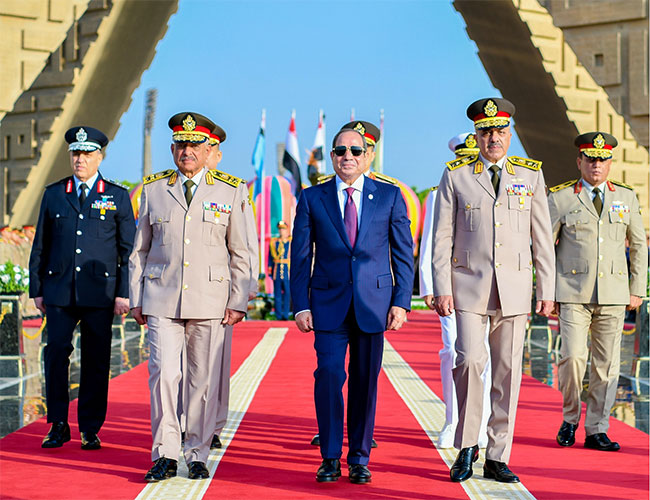
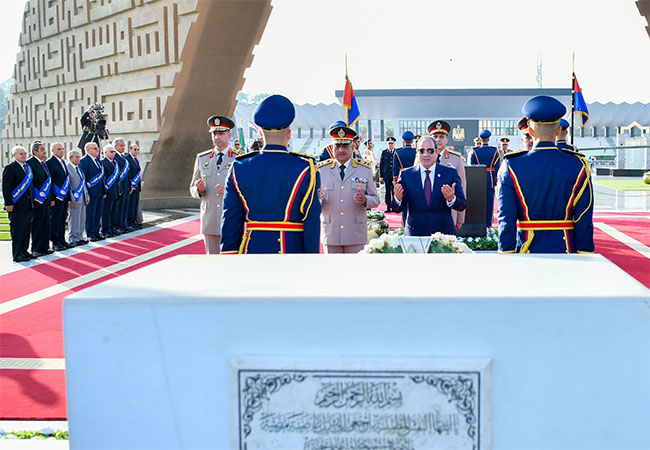
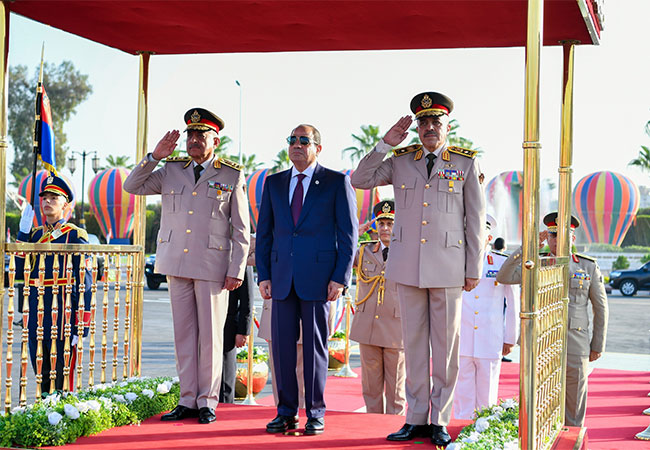
October 6 is observed as an official public holiday in Egypt and is marked through national ceremonies and commemorative activities. Official commemorations have included wreath-laying at the Tomb of the Unknown Soldier and ceremonies honouring the memory of the October War and those who sacrificed their lives.
The occasion brings together several themes deeply embedded in Egypt’s national memory: the courage of its soldiers, the sacrifices of fallen servicemen, the restoration of national confidence, the defence of territorial sovereignty and the eventual recovery of Sinai.
For generations of Egyptians, the crossing of the Suez Canal on October 6, 1973 has consequently remained a symbol of determination in the face of adversity. Its broader historical legacy is also reflected in the diplomatic developments that followed — demonstrating that the pursuit of national security and sovereignty can ultimately be accompanied by negotiations and peace.
As Egypt marks Armed Forces Day, October 6 therefore stands as both a remembrance of a decisive chapter in the country’s military history and a reflection on the values of valour, dignity, sovereignty, sacrifice and national resilience that have shaped Egypt’s modern history.