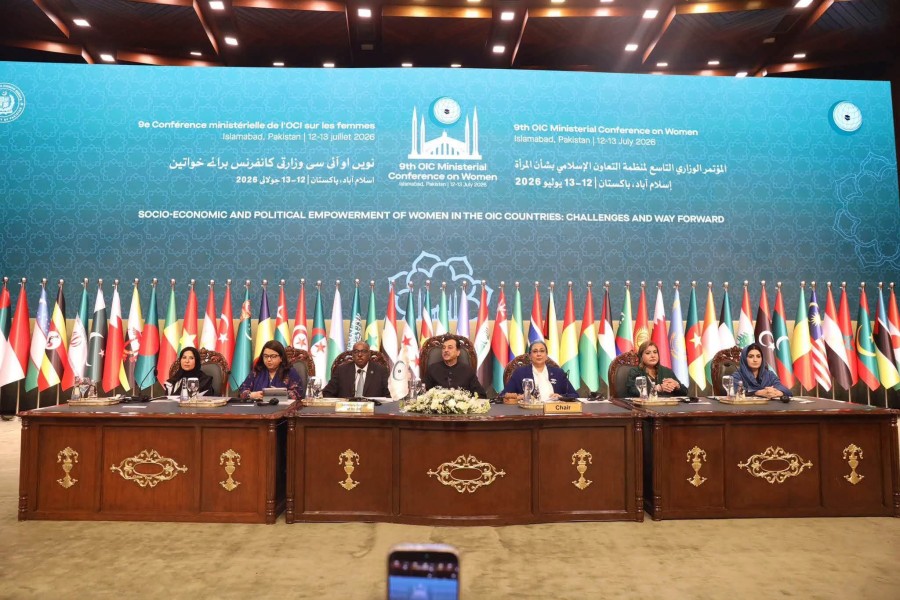
ISLAMABAD, Monday, July 13, 2026 (WNP): The Ninth Ministerial Conference on Women of the Organisation of Islamic Cooperation (OIC) concluded in Islamabad on Monday with the unanimous adoption of the Islamabad Declaration, reaffirming the Muslim world’s collective commitment to advancing the socio-economic and political empowerment of women while launching the landmark Islamabad Initiative on Women’s Digital Inclusion to equip women and girls with the skills and opportunities needed in the digital age.
The declaration was adopted by ministers and heads of delegation responsible for women’s affairs from OIC member states following two days of deliberations under the theme, “Socio-Economic and Political Empowerment of Women in the OIC Countries: Challenges and Way Forward.”
The conference reaffirmed that the teachings and values of Islam uphold the dignity, rights, participation and advancement of women and girls, recognizing their indispensable role in family, society, sustainable development, economic prosperity, social cohesion and peace. Delegates acknowledged the progress made by many OIC member states in improving women’s education, healthcare, economic participation and public representation while emphasizing that significant disparities and challenges continue to persist across the Muslim world.
The Islamabad Declaration reaffirmed the commitment of member states to promote the socio-economic and political empowerment of women in accordance with national priorities, constitutional frameworks and the principles of the OIC.
It encouraged governments to strengthen policies and institutional mechanisms that enhance women’s full, effective and meaningful participation in political life, public administration, diplomacy, the judiciary and peace and security institutions.
Recognizing education as the foundation of empowerment, the declaration urged member states to expand access to quality education, vocational training, leadership development and professional opportunities for women and girls. It also called for removing educational and professional barriers to ensure the full and equal participation of women in public life, including in Afghanistan, in accordance with Islamic values.
The conference emphasized the importance of strengthening women’s economic empowerment by expanding access to employment, entrepreneurship, land ownership, financial services, markets and social protection systems. It encouraged the development of inclusive financial systems, including Islamic finance instruments, microfinance, digital financial services and women-focused financial products to facilitate greater economic participation.
Delegates also called for enhanced support to women entrepreneurs and women-led small and medium-sized enterprises through improved access to capital, innovation ecosystems, trade opportunities and capacity-building initiatives.
A major focus of the conference was digital transformation and technological inclusion. The declaration encouraged member states to prioritize women’s participation in science, technology, engineering and mathematics (STEM), digital skills development, artificial intelligence, innovation and emerging technologies. It further urged governments to bridge the digital gender divide by expanding affordable access to digital infrastructure, internet connectivity, devices and digital literacy programmes, particularly in rural and underserved communities.
In one of the conference’s most significant outcomes, ministers officially launched the Islamabad Initiative on Women’s Digital Inclusion, a voluntary platform under the auspices of the OIC aimed at promoting digital literacy, digital entrepreneurship, STEM education, artificial intelligence skills, cybersecurity awareness and equitable access to digital technologies for women and girls throughout OIC member states.
The initiative also invites interested member states, OIC institutions and international development partners to cooperate through scholarships, technical training, mentorship programmes, exchange of expertise and sharing of best practices to accelerate women’s digital empowerment.
The declaration urged member states to strengthen measures aimed at preventing and combating all forms of violence against women and girls, including domestic violence, trafficking, harassment, cyberbullying and emerging digital threats such as online exploitation and deepfake technologies. It further called for stronger international cooperation to combat Islamophobia, xenophobia, racial and religious intolerance, hate speech and discrimination targeting Muslim women and girls, particularly those living as minorities.
Recognizing women as key agents of resilience and sustainable development, the conference encouraged member states to integrate gender-sensitive approaches into climate action, disaster risk reduction, environmental sustainability, peacebuilding, conflict prevention, mediation and post-conflict recovery efforts.
The declaration expressed deep concern over the disproportionate impact of armed conflicts, terrorism, violent extremism, humanitarian crises, forced displacement, climate-related disasters and foreign occupation on women and girls.
It voiced strong solidarity with the women and girls of Palestine and Indian Illegally Occupied Jammu and Kashmir (IIOJK), calling upon the international community, including the United Nations, to take immediate and effective legal, humanitarian, educational, economic and psychosocial measures to alleviate their suffering and strengthen their resilience.
The conference welcomed the growing role of the Women Development Organization (WDO) as the OIC’s principal institutional mechanism for advancing women’s development and encouraged closer cooperation among member states, OIC institutions and international partners to exchange best practices and implement joint programmes aimed at promoting women’s empowerment throughout the Muslim world.
Delegates also requested the OIC General Secretariat, in cooperation with the WDO, to compile successful policies, innovative programmes and best practices on women’s socio-economic and political empowerment for dissemination across OIC member states, while facilitating the implementation of the Islamabad Declaration and reporting progress at the next ministerial conference.
The conference concluded by reaffirming that investing in women’s education, leadership, skills development, protection and economic participation is an investment in the future prosperity, resilience and sustainable development of the Muslim Ummah.
The participating delegations expressed their sincere appreciation to the Government and people of Pakistan for successfully hosting the Ninth OIC Ministerial Conference on Women and commended the excellent arrangements made for the event. They also conveyed special gratitude to Prime Minister Muhammad Shehbaz Sharif for extending his patronage to the conference and honoring its inaugural session with his presence, underscoring Pakistan’s commitment to advancing women’s empowerment and strengthening cooperation across the Islamic world.