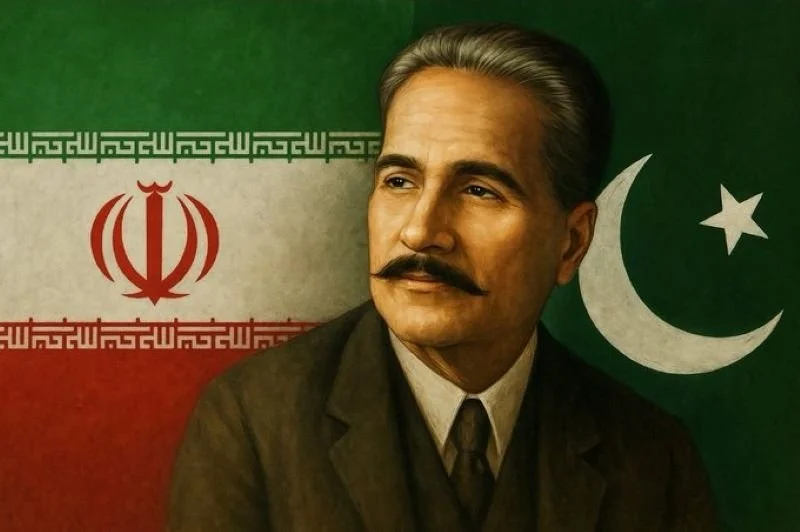

ISLAMABAD, Monday, April 20, 2026 (WNP): Allama Muhammad Iqbal, who was born on November 9, 1877, in Sialkot in present-day Punjab, Pakistan, and passed away on April 21, 1938, was not merely a Muslim philosopher, poet, and politician. He can rightfully be described as “the most Iranian among non-Iranians” in history. Although he never had the opportunity to visit Iran, his heart and mind were deeply immersed in the love of that land, and his name remains forever associated with Iranian culture and civilization. Today, on the occasion of this great thinker’s death anniversary, it is our duty—as an Iranian and as a cultural representative in Pakistan—to highlight his unparalleled role in strengthening the bond between these two brotherly nations.
Iqbal Lahori was born into a devout family of Kashmiri Brahmin origin that had embraced Islam. He completed his education in philosophy in Lahore and later traveled to England for higher studies, where he conducted research at the Universities of Cambridge and Munich. His doctoral thesis, titled “The Development of Metaphysics in Persia,” clearly demonstrates his deep intellectual connection with Iranian thought from the very beginning of his academic journey. Alongside his scholarly and political activities, Iqbal gained prominence as a powerful poet in both Persian and Urdu. It was his vision of a separate Muslim state that ultimately paved the way for the creation of Pakistan.
The high status of Iran, Persian language in Iqbal’s thought
Few individuals have expressed their love and devotion to Iran and the Persian language as passionately and eloquently as Iqbal Lahori. He described Persian as “the sweetest language in the world” and proudly wrote:
“Though Hindi is sweet as sugar,
The style of Dari speech is even sweeter.”
More than 70 percent of his poetic works were written in Persian. This was not coincidental; he believed that “no language other than Persian could fully carry the weight of his ideas.” His timeless works, including Asrar-e-Khudi, Rumuz-e-Bekhudi, Zabur-e-Ajam, and Javid Nama, were all written in Persian and clearly reflect the influence of Iranian mysticism and philosophy, particularly that of Jalal ad-Din Rumi. He has rightly been called the “Ferdowsi beyond the borders,” as just as Ferdowsi played a vital role in preserving the Persian language in Iran, Iqbal rendered a similar service to Persian culture and language in the Indian subcontinent.
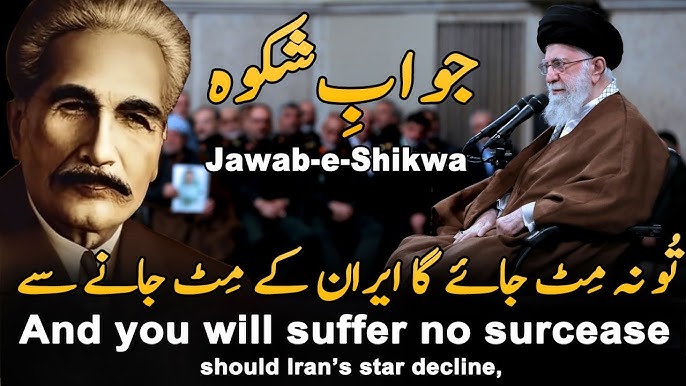
Iqbal Lahori in view of Ali Khamenei
Admiration for Iqbal among Iranians is not limited to the general public and cultural circles; the highest leadership of Iran has also consistently acknowledged his stature. The Leader of the Islamic Revolution, Ayatollah Ali Khamenei, is among those who have paid special attention to Iqbal’s personality and have analyzed his thought in numerous speeches.
Speaking at the first International Congress on Allama Iqbal Lahori held at Tehran University in 1985, he emphasized the significance of Iqbal’s message, stating: “Many of Iqbal’s messages belong to us today… our nation has put into practice Iqbal’s message of selfhood… Islam, in its essence, offers the most independent source of guidance for human life and society.” This perspective reflects the deep intellectual harmony between Iranian leadership and Iqbal’s awakening ideas. During his historic visit to Pakistan, Ayatollah Khamenei also paid homage at Iqbal’s mausoleum in Lahore.
Iqbal: An eternal cultural bridge between two nations
Iqbal Lahori is not merely a historical figure but a living and enduring bridge that continues to connect the hearts of the people of Iran and Pakistan. His personality and works serve as a “cultural knot” binding the two nations together. The Iranian Ambassador to Pakistan once described Iqbal as “a symbol of friendship between two friendly and neighboring countries,” adding that:
“Iqbal infused new spirit into the ancient tree of friendship between Iran and Pakistan through his poetry.”
He provides a unique and profound platform for strengthening cultural diplomacy and promoting interaction among intellectuals, artists, and thinkers of both nations. The recognition of Iqbal’s stature by the Iranian President during a visit to Lahore further reflects this shared understanding.
The importance of Iqbal for Iranians
For us, as Iranians, Iqbal Lahori represents the revival of Islamic thought and the rediscovery of cultural identity. He struggled against the intellectual and cultural dominance of Western colonialism and called upon Muslims to regain self-confidence and rely on their authentic Islamic-Iranian identity. His powerful verse:
“A man will arise who will break the chains of the enslaved;
I have seen it through the window of your prison walls”
has long served as a guiding light for those striving for freedom and awakening in Iran.
For the younger generation in Iran, knowing Iqbal is not a choice but a necessity—so that they may understand the deep roots of their cultural identity and its connection to the world around them. In many ways, Iqbal can be regarded as a modern-day Rumi, who deeply understood Iran’s philosophical tradition and adapted it to the needs of the contemporary era.
Conclusion
Today, on the death anniversary of Allama Iqbal Lahori, we are not only remembering a great poet and philosopher but also celebrating a bond that transcends geographical boundaries and unites Iran and Pakistan as a shared cultural family. Iqbal is a bridge built upon the waves of history—one that leads us to common sources of love, wisdom, language, and civilization.
It is our responsibility, as Iranians and Pakistanis, to preserve this invaluable legacy and to pass on Iqbal’s ideas to future generations, ensuring that this strong and enduring bridge remains intact forever.