Aljadaan says budget prioritizes essential services, quality of life, private-sector growth and economic resilience; SAR544 billion allocated to education, health, social development and municipal services

RIYADH, Tuesday, November 24, 2026 (WNP): Saudi Arabia has projected government expenditure of SAR1.392 trillion and revenues of SAR1.202 trillion for the 2027 fiscal year, resulting in an estimated budget deficit of approximately SAR190 billion, as the Kingdom continues to pursue economic diversification, strengthen private-sector participation and sustain its development priorities under Saudi Vision 2030.
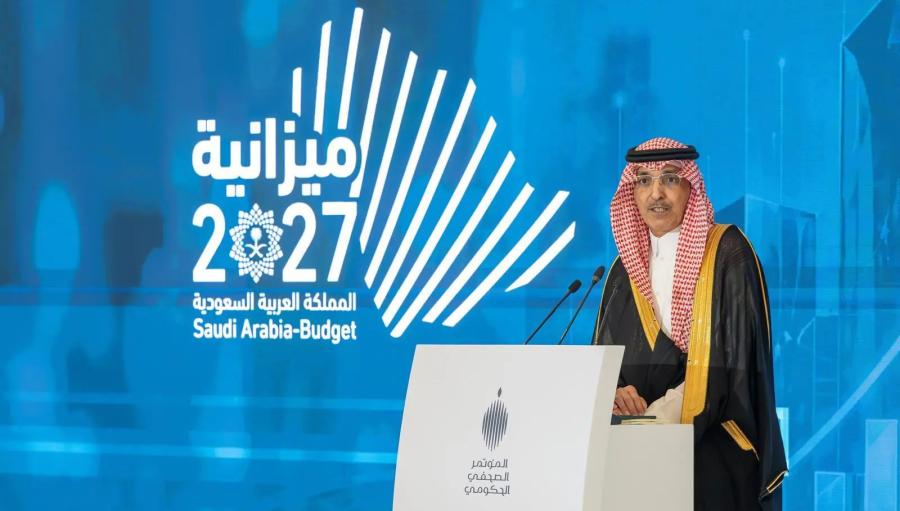
Minister of Finance Mohammed Aljadaan announced the key budget figures during a government press conference organized by the Ministry of Media in Riyadh following the approval of the State General Budget for fiscal year 1448/1449 AH (2027).
He said the budget would prioritize the continued provision of essential services to citizens, improving their quality of life and directing support to eligible groups, alongside supporting the private sector, promoting economic growth and safeguarding the Kingdom’s national achievements.
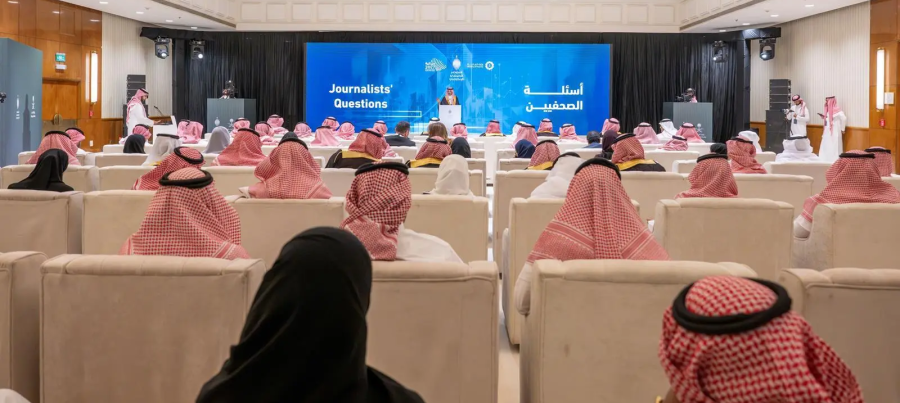
Aljadaan also reviewed the Kingdom’s fiscal and economic performance in 2026, the 2027 budget framework, medium-term public finance projections, sectoral expenditure allocations and the outlook for economic growth.
The finance minister said Saudi Arabia had undergone a profound economic and developmental transformation over the past decade following the launch of Saudi Vision 2030. Non-oil activities had expanded, the private sector’s contribution to the economy had increased and public services had improved despite successive global economic challenges.
He said Vision 2030 was introduced to restructure the economy and public finances, diversify the economic base and non-oil revenue sources, strengthen private-sector participation and enhance the Saudi economy’s resilience to external shocks.
According to the minister, fiscal year 2026 is expected to close with expenditure of approximately SAR1.436 trillion, revenues of SAR1.191 trillion and a deficit of SAR245 billion, equivalent to around 4.9 percent of gross domestic product (GDP).
He reaffirmed the government’s ability to manage deficit levels responsibly despite economic and geopolitical challenges.
Aljadaan noted that although GDP declined by 2.1 percent due to lower oil production volumes, non-oil GDP maintained positive growth. The non-oil economy’s share of total GDP reached 57.7 percent, the highest level recorded in the Kingdom since data collection began.
He said the performance reflected the growing contribution of sectors including technology, tourism, industry and military industries, which had recorded significant expansion in recent years.
The minister said domestic economic indicators demonstrated the resilience of the Saudi economy, with domestic demand continuing to grow despite external pressures.
Employment of Saudi nationals in the private sector increased by 7 percent compared with the previous year, while profits of companies listed on the capital market rose by 17 percent through the third quarter.
The Purchasing Managers’ Index (PMI) reached 54 points in October, exceeding the averages recorded by G20 and Gulf Cooperation Council (GCC) countries.
He added that the number of micro, small and medium-sized enterprises increased by 4 percent between the end of 2025 and the second quarter of 2026, reaching 1.832 million establishments. The growth, he said, reflected the opportunities perceived by investors and entrepreneurs in the Saudi market.
On public finance and banking indicators, Aljadaan said government deposits with the Saudi Central Bank (SAMA) had been maintained at SAR399 billion, while SAMA’s foreign reserve assets stood at SAR1.7 trillion at the end of the first half of the year.
Bank credit grew by approximately 7 percent, while non-performing loans remained below 1 percent, among the lowest levels globally.
He said inflation was expected to reach 1.8 percent this year despite the International Monetary Fund raising its global inflation forecast for 2026 from 4.1 to 4.7 percent. He attributed domestic price stability to proactive government interventions.
Aljadaan said non-oil activities grew by 2.8 percent in the first quarter of 2026 before being affected by the repercussions of the geopolitical crisis and the near-total closure of ports in the eastern part of the Kingdom.
Growth resumed in the third quarter following the rerouting of imports and exports through western ports. He projected non-oil GDP growth of 2.5 percent by the end of the year.
He revealed that Saudi Arabia had introduced more than 200 measures since the beginning of the crisis, covering policies, procedures, regulations and financing arrangements. National development funds also provided financing facilities to borrowers and businesses to support working capital, imports of food and essential commodities, and production inputs.
The minister said the Royal Order to reactivate the Unemployment Insurance (SANED) programme for three months for sectors affected by the crisis, with the possibility of extension, was intended to preserve contractual relationships between employers and employees and prevent job losses resulting from temporary difficulties.
A ministerial committee had also been established to respond flexibly and swiftly to the needs of business sectors, including requests for exemptions, he added.
Aljadaan further highlighted the establishment, for the first time in the Kingdom, of an insurance pool in cooperation with the Insurance Authority and national insurance companies to reduce insurance costs for shipments arriving at Saudi ports.
The initiative had helped lower insurance costs by approximately 50 to 60 percent, with its full impact expected to emerge gradually as new insurance policies were issued.
He also outlined measures to facilitate the movement of imports into Saudi Arabia and other GCC countries through Red Sea ports. These include streamlined customs procedures, easier entry and exit for trucks, faster inspections and stronger coordination among regional countries.
Regarding the 2027 budget allocations, Aljadaan said approximately SAR544 billion would be directed to education, health, social development and municipal services.
Expenditure on the military sector was estimated at SAR263 billion, an increase of around SAR9 billion compared with expected spending for the current year.
He said medium-term fiscal estimates for 2028 and 2029 were intended to provide businesses and investors with a clearer understanding of the government’s fiscal direction and spending priorities.
The minister projected GDP growth of 10 percent in 2027, compared with the 12 percent estimate included in the Pre-Budget Statement. He explained that the revision reflected higher oil production during the final three months of this year, which had raised the comparison base.
The projected expansion would be driven mainly by increased oil production and continued growth in non-oil activities, he said.
Aljadaan added that nominal GDP was expected to reach approximately SAR5.364 trillion by the end of 2026, while inflation was projected at 2.3 percent next year.
He described Saudi Vision 2030 as more than a project, initiative or strategy, saying it represented an ongoing structural transformation of the Kingdom’s social, economic and financial landscape that would continue despite challenges.
The finance minister said the government’s priorities remained protecting the country and its achievements, ensuring essential services for citizens, providing the private sector with a clear outlook on government policies and support, and continuing investment in the basic infrastructure underpinning the economy.
He said Saudi Arabia had demonstrated its ability to withstand successive global economic and geopolitical crises over recent decades, emerging stronger and more resilient. Positive economic results in 2026 and the outlook for 2027, he added, reflected the strength and stability of the Kingdom’s economic foundations.
Citing official figures from independent entities, Aljadaan said private-sector investment continued to grow through the third quarter of 2026 at a faster pace than in the previous year, alongside rising consumption. He said the trend demonstrated confidence among domestic and private investors in the Saudi economy, beyond government expenditure and investments by the Public Investment Fund (PIF).
He described the government’s budget preparation process as conservative and disciplined, with estimates based on realistic assumptions rather than excessive optimism. This approach, he said, had contributed to actual revenues exceeding announced budget estimates in recent years.
Addressing global fiscal risks, Aljadaan identified rising sovereign debt as one of the major challenges facing the world economy, noting that the issue had featured prominently in discussions at the annual meetings of the IMF and World Bank, particularly as debt in some countries had exceeded 100 percent of GDP.
He said Saudi Arabia maintained a strong fiscal position, with debt levels remaining safe and sustainable relative to GDP. Debt-servicing costs as a proportion of total revenue were also within acceptable limits, while the economic returns generated through borrowing had been positive and outweighed its costs.
On the impact of higher global interest rates, the minister said between 89 and 90 percent of government debt carried fixed rather than variable interest rates. More than half of the debt portfolio had been borrowed at rates below 3 percent.
He said there was no cause for concern over the medium term, crediting the National Debt Management Center (NDMC) with efficiently managing the portfolio and highlighting the professionalism of its young Saudi workforce.
Aljadaan also discussed the transition from the Privatization Program to the National Privatization Strategy, explaining that the former had served as a foundational initiative and concluded its work with the preparation of the new strategy, which he described as ambitious.
He said approximately 200 privatization contracts had been signed since 2017, with a combined value of around SAR800 billion. These included asset sales and public-private partnership agreements that had supported private-sector participation and improved the efficiency of government projects during construction and operation.
Privatization efforts were continuing, with around 202 projects at different stages of tendering, bid submission and proposal evaluation, he added.
The projects cover several sectors, including water, electricity, healthcare, environment, transportation and real estate, among others.
Aljadaan said the government would continue to pursue fiscal discipline while investing in strategic priorities, strengthening economic diversification and creating an environment conducive to sustainable growth and private-sector investment.