
Digital transformation under Vision 2030 places Kingdom among world’s top five digital governments; government services, healthcare, justice and payments record major efficiency gains

RIYADH, Sunday, November 22, 2026 (WNP): Saudi Arabia has advanced to fourth place globally in the 2026 United Nations E-Government Development Index (EGDI), placing the Kingdom among the world’s top five digital governments, Governor of the Digital Government Authority (DGA) Eng. Ahmed bin Mohammed Alsuwaiyan has said.
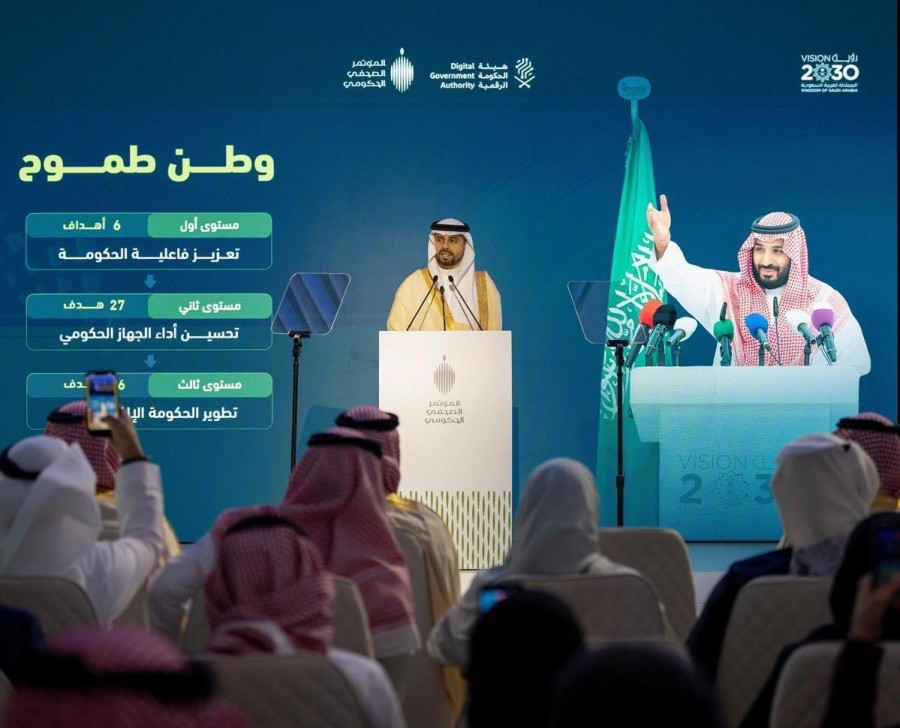
Addressing a government press conference organised by the Ministry of Media in Riyadh, Alsuwaiyan attributed the achievement to the Kingdom’s digital transformation under Saudi Vision 2030, launched by His Royal Highness Prince Mohammed bin Salman bin Abdulaziz Al Saud, Crown Prince and Prime Minister, on April 25, 2016.
He said Vision 2030, built on the three pillars of a Vibrant Society, a Thriving Economy and an Ambitious Nation, had provided the foundation for improving government effectiveness and performance, with the objective of positioning Saudi Arabia among the world’s leading digital governments.
The Kingdom’s position in the overall UN E-Government Development Index has improved from 52nd in 2018 to fourth globally in 2026 among 194 countries. Saudi Arabia has also risen from 49th place in 2018 to first globally in digital government services, while Riyadh has advanced from 30th place to first worldwide in digital services.
Alsuwaiyan said the strategic objectives of digital transformation had remained consistent for more than a decade despite rapid technological developments. These objectives focus on raising productivity, improving efficiency and enhancing the experience of citizens, residents, visitors and businesses.
Highlighting the impact of digital services, he said the Ministry of Interior had reduced the time required to complete several services through the Absher platform from approximately four hours to just 30 seconds. These include issuing family registers and changing citizens’ first names.
The transformation has generated estimated annual savings of SAR26 billion and eliminated the need for more than 1.3 million in-person visits every day, significantly simplifying procedures and improving the delivery of government services.
In the justice sector, around 95 percent of court hearings are now conducted remotely through virtual courts. The average time for issuing judicial rulings in personal status courts has fallen from 219 days to 20 days, while more than 60 million in-person visits annually have been eliminated.
Healthcare services have also undergone substantial transformation, with 51 percent of medical appointments now conducted remotely through the Seha Virtual Hospital and virtual clinics.
Alsuwaiyan highlighted the use of robotic technology in surgical procedures and tumour removal at King Faisal Specialist Hospital and Research Centre, describing it as a world-first development. The technology has helped reduce surgical trauma and accelerate recovery, enabling patients to be discharged on the same day instead of remaining in hospital for seven days.
The time required to dispense medicines has also been reduced from 72 hours to less than eight minutes, generating estimated savings of SAR1.5 billion in medication costs.
The financial ecosystem has witnessed significant progress, with electronic payments increasing from 18 percent in 2016 to 85 percent. Digital services now allow individuals to complete transactions through their mobile phones without carrying physical documents or payment methods, including national identity cards, driving licences, bank cards or cash.
Customs clearance has been reduced from 12 days in 2017 to just two hours through integration with 26 government entities. Similarly, the procurement and supply of government goods and products now takes only two days compared with 120 days previously, supported by a government electronic marketplace offering more than 219,000 products.
In community services, the Ehsan platform processes more than 390,000 donations daily, with cumulative donations reaching SAR17 billion. The time required to submit a domestic worker recruitment request has also dropped from 30 days to eight minutes, while in-person visits to Social Insurance branches have been eliminated following more than five million such visits in 2017.
The digital transformation has also enhanced services for pilgrims and visitors to the Two Holy Mosques. The Nusuk platform has surpassed 60 million users, making it the Kingdom’s largest platform by users, with the potential to expand its reach to serve more than two billion Muslims worldwide.
Daily visitors to Al-Rawdah Al-Sharifah have increased from 4,000 to 55,000, while the time required to issue Hajj and Umrah visas has been reduced from five days to five minutes. More than 22 million such visas were issued in 2025.
As part of the Year of Artificial Intelligence, Alsuwaiyan cited further achievements across government sectors. The Ministry of Energy has reduced the time required to process and monitor oil and gas supplies from 25 minutes to 30 seconds.
The Ministry of Municipalities and Housing has cut the cost of monitoring visual blight by 76 percent, from SAR197 million to SAR47 million, while expanding geographical coverage from 11 percent to 95 percent. Meanwhile, the Ministry of Environment, Water and Agriculture has achieved estimated savings of SAR120 million through its Water Sustainability platform and reduced the processing time for violations involving water resources and wells from six days to one.
He said these achievements reflected a broader transformation based on integrating government operations, strengthening national digital infrastructure and making shared resources available to public-sector entities.
The Kingdom has established a comprehensive digital government ecosystem that provides government entities with more than 20 shared resources, including the unified digital identity system Nafath, the government payment gateway and the integration platform.
More than 1,800 services are available through the unified national application Tawakkalna, which handles over 88 million transactions daily. More than 200 government entities have also adopted a unified website design under the Platforms Code initiative.
Alsuwaiyan said the government had placed citizens and beneficiaries at the centre of service delivery by developing 25 integrated and interconnected service pathways, known as “life journeys.” These include services for mothers and children as well as Hajj and Umrah pilgrims.
Public participation in government decision-making has also expanded through 883 digital participation initiatives, while the digital inclusivity index, aimed at empowering older people and persons with disabilities, has reached 77 percent.
To strengthen institutional capacity, the Digital Government Authority has established an innovation centre equipped with specialised spaces, workshops and laboratories to develop high-quality services and products. More than 4,000 government employees have benefited from its programmes, while it has provided over 2,100 specialised consultations and issued more than 90 certifications in enterprise architecture and government excellence.
Highlighting the importance of private-sector partnerships, Alsuwaiyan said government spending on information and communications technology services exceeded SAR145 billion between 2022 and the end of 2025. Cloud computing adoption across government entities reached 49 percent, while contracts awarded to small and medium-sized enterprises exceeded SAR9 billion in 2025.
He said national regulations and technical standards had played a vital role in improving digital services and government performance. The digital transformation index, one of four key indicators under an integrated measurement framework, rose from 69 percent in 2021, with a target of reaching 90 percent in 2026.
Responding to journalists’ questions, Alsuwaiyan said all regions, governorates, centres and villages across the Kingdom received equal attention, with high-quality digital services increasingly becoming an essential part of daily life.
He said the authority had developed a national index based on internationally approved technical standards to assess accessibility for older people and persons with disabilities, as well as alternative service channels for those experiencing technical difficulties. The measure forms part of the Digital Experience Maturity Index, which evaluates more than 60 digital platforms and incorporates feedback from hundreds of thousands of citizens and residents.
Compliance currently stands at approximately 77 percent, he said, with a target of 90 percent being pursued in cooperation with relevant government entities.
On the future of government operations, Alsuwaiyan explained that e-government initially focused on transferring paper-based procedures into electronic systems. This had subsequently evolved into digital government, centred on re-engineering processes, improving operational efficiency and adopting principles such as the once-only submission of data.
The next phase, he said, would be the transition towards smart government, enabling traditional operating models in sectors such as healthcare, education and justice to be rethought through advanced technologies and more efficient service delivery.
He stressed that artificial intelligence and emerging technologies would have an impact far beyond the public sector, automating repetitive tasks, improving job quality and increasing economic output. He highlighted the potential of generative, agentic and physical AI in logistics, transport, retail, industry and mining to support economic growth and enhance Saudi Arabia’s global competitiveness.
On the consolidation of digital platforms, Alsuwaiyan said the objective was not simply to reduce the number of websites and applications but to provide individuals and businesses with the best possible user experience. The number of government platforms had been reduced from more than 800 to approximately 400, with greater integration through shared technical standards, the unified national access system and the government payment gateway.
Regarding cybersecurity, he said digital transformation required effective risk management, preparedness and stronger digital resilience. The authority continuously monitored the readiness and business continuity of government entities through alternative arrangements, periodic exercises and readiness tests to strengthen their ability to respond to cyber risks.
Alsuwaiyan also highlighted opportunities for Saudi Arabia to share its digital government experience internationally through technology exports and collaborative models. He said the Kingdom was working with the United Nations, the Gulf Cooperation Council and other international organisations to explore ways of connecting national digital governments, enabling the seamless exchange of services and data and improving efficiency and productivity.
He observed that while citizens in Saudi Arabia could increasingly access services through their mobile phones, international travel still required physical passports, underscoring the potential for greater interoperability between governments.
Reflecting on the Kingdom’s progress, Alsuwaiyan said Saudi Arabia had made substantial investments in its young men and women and would continue to strengthen human capital to sustain digital development.
He recalled that the Kingdom’s ranking in the overall E-Government Development Index had moved from 36th to 44th and then 52nd between 2016 and 2018, highlighting the importance of restructuring, effective governance and establishing the right institutional frameworks before results could be achieved.
He said the strong foundations laid under Saudi Vision 2030 had enabled the Kingdom to achieve its digital government objectives four years ahead of schedule and surpass its targets.
Alsuwaiyan described the progress as a source of national pride and a testament to the success of Saudi Vision 2030, adding that the Kingdom’s digital transformation journey would continue with greater ambition, innovation and a focus on delivering improved services and opportunities for citizens, residents and businesses.