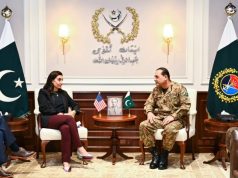
DHAKA, Tuesday, February 17, 2026 (WNP): Pakistan’s Federal Minister for Planning, Development and Special Initiatives Ahsan Iqbal met Prime Minister Tarique Rahman in Dhaka following the latter’s oath-taking ceremony, conveying congratulations on behalf of Prime Minister Shehbaz Sharif and extending a formal invitation to visit Pakistan.
The meeting, described by officials as cordial and forward-looking, focused on revitalising bilateral relations and exploring new areas of cooperation between Pakistan and Bangladesh.
According to diplomatic sources, discussions covered trade expansion, enhanced maritime connectivity, youth empowerment initiatives, knowledge-sharing partnerships and collaboration in emerging technologies, including artificial intelligence. Both sides also exchanged views on regional cooperation and the potential revival of the South Asian Association for Regional Cooperation (SAARC) as a platform for geo-economic progress in South Asia.
Minister Ahsan Iqbal emphasized the importance of building future-oriented ties anchored in economic cooperation, innovation and people-to-people engagement. He noted that stronger connectivity and institutional collaboration could unlock significant trade and investment potential between the two countries.
Prime Minister Tarique Rahman, according to officials, welcomed the message of goodwill from Islamabad and expressed interest in expanding pragmatic cooperation that contributes to shared prosperity and regional stability.
They view the high-level engagement as part of a broader diplomatic effort to reset Pakistan–Bangladesh relations, which have historically been shaped by complex political and historical factors. They say focusing on trade, technology and youth-driven collaboration could provide a constructive pathway for strengthening trust and advancing mutual economic interests.
The meeting in Dhaka comes amid renewed conversations across South Asia on regional integration, economic resilience and connectivity, with both countries signaling readiness to move toward a more cooperative and development-focused bilateral relationship.