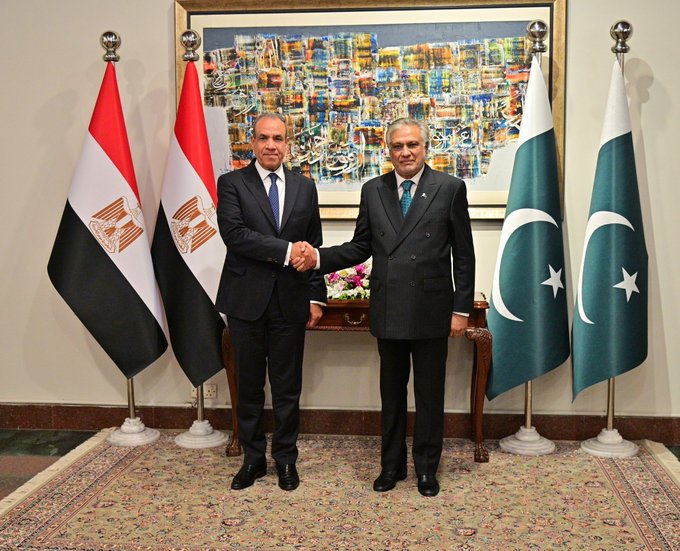
ISLAMABAD, Sunday, March 29, 2026 (WNP): Deputy Prime Minister and Foreign Minister Mohammad Ishaq Dar held comprehensive talks with Badr Abdelatty, reaffirming the commitment of Pakistan and Egypt to further deepen their longstanding bilateral relations.
During the meeting, both sides reviewed the full spectrum of ties and expressed satisfaction over the positive momentum generated through recent high-level exchanges, including the Egyptian foreign minister’s visit to Pakistan in November 2025.
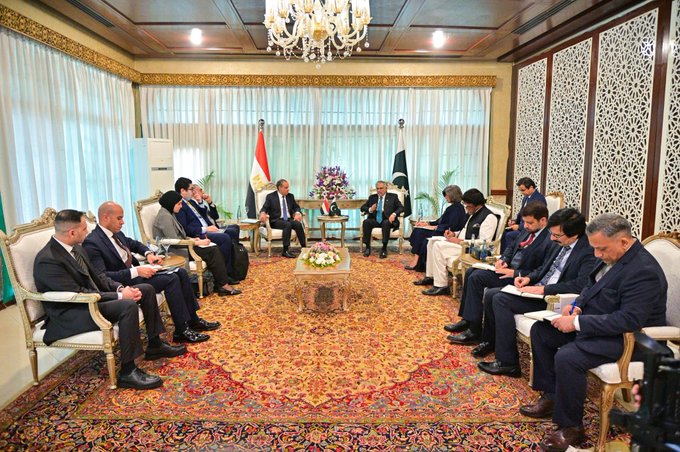
The two leaders emphasized the need to enhance bilateral trade and investment, agreeing to activate institutional mechanisms such as the Joint Ministerial Commission and promote business-to-business linkages to boost economic cooperation.
They also expressed satisfaction over the trajectory of defense and security collaboration and agreed to further strengthen cooperation through training exchanges and other institutional frameworks.
The Pakistani side appreciated Egypt’s continued support in the health sector, particularly in efforts to combat hepatitis C, and welcomed ongoing collaboration in this area.
Exchanging views on regional and international developments, particularly the situation in the Middle East, both ministers underscored the importance of restraint, de-escalation and resolving disputes through dialogue and diplomacy.
Deputy Prime Minister Ishaq Dar reiterated Pakistan’s unwavering support for the Palestinian people and strongly condemned Israeli actions in Gaza and the West Bank, while appreciating Egypt’s role in facilitating humanitarian assistance to Gaza, including support extended to Pakistan’s relief efforts.
Both sides also agreed to continue close coordination at multilateral fora, including the United Nations and the Organization of Islamic Cooperation.
The meeting reaffirmed the shared resolve of Pakistan and Egypt to further strengthen their close and brotherly relations and deepen cooperation across all areas of mutual interest, reflecting continued coordination amid evolving regional developments.