
ISLAMABAD, Saturday, June 6, 2026 (WNP): The latest escalation triggered by United States and Israeli military strikes on Iran has once again exposed the fragility of peace in the Middle East. Missile exchanges, attacks on military installations, threats to maritime routes and growing fears of a wider regional conflict have pushed the region into one of its most dangerous moments in recent years. Reports of Iranian missile and drone attacks targeting Gulf states and American facilities have further heightened concerns about a conflict that could engulf multiple countries and destabilize the global economy.
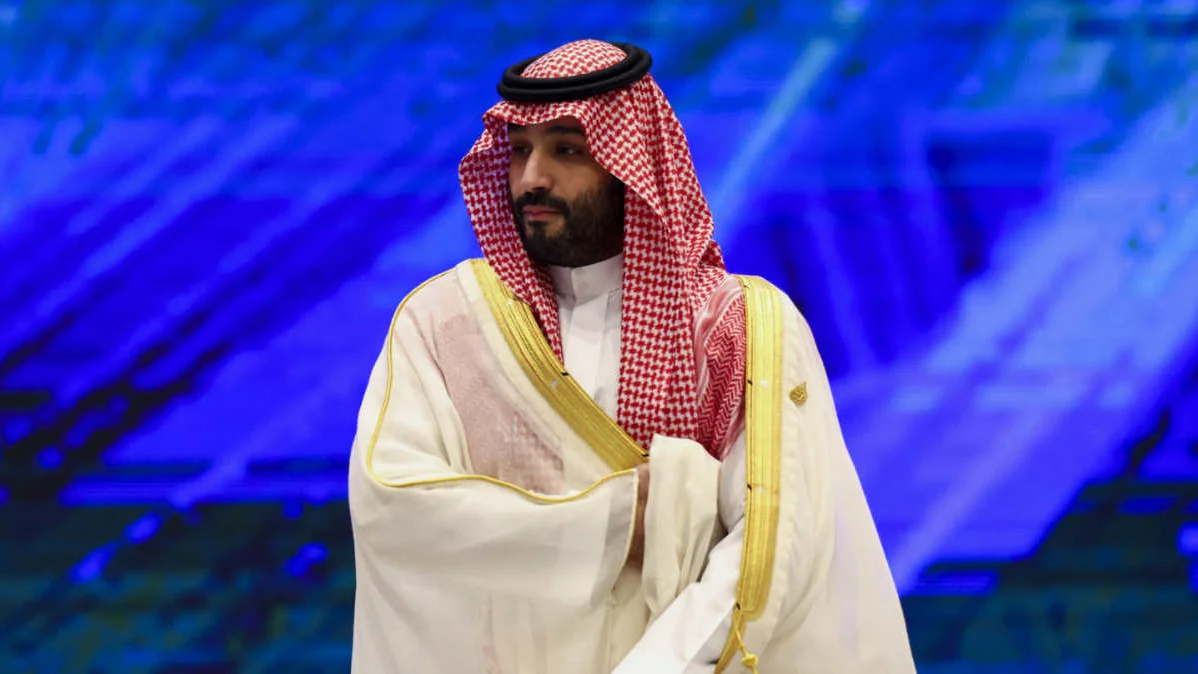
Against this backdrop, Saudi Crown Prince and Prime Minister Mohammed bin Salman has emerged as a leader whose emphasis on restraint and de-escalation helped prevent an even broader regional catastrophe.
The Middle East has witnessed a chain of interconnected crises in recent months. The confrontation involving the United States, Israel and Iran has threatened vital energy routes, particularly around the Strait of Hormuz, while raising fears of a wider regional war. Oil markets have reacted nervously to every new escalation, reflecting concerns that any major expansion of hostilities could affect global energy supplies and economic stability.
In such an environment, leadership is often measured not by the ability to wage war but by the wisdom to avoid one.
Saudi Arabia itself faced security threats and attacks during the broader regional confrontation. Yet Riyadh’s leadership consistently emphasized regional stability and sought to avoid actions that could transform a dangerous crisis into an uncontrollable war. Multiple reports indicate that Saudi policymakers remained focused on preventing escalation while maintaining diplomatic channels for reducing tensions.
To cope with these critical circumstances, Mohammed bin Salman’s strategic calculation was straightforward: another major war in the Gulf would benefit no one.
A full-scale conflict involving Iran, Gulf states, Israel and the United States could have produced devastating consequences for millions of civilians. Critical infrastructure, energy facilities, ports, airports and economic centers across the region would have become potential targets. The humanitarian consequences would likely have extended far beyond national borders, affecting global trade, energy markets and food security. Recent exchanges have already demonstrated how quickly tensions can spread across multiple countries.
For Saudi Arabia, the stakes were particularly high.
The Kingdom’s Vision 2030 transformation agenda is built on stability, economic diversification, investment and development. Regional war would threaten decades of planning and jeopardize opportunities for future generations. Mohammed bin Salman has therefore consistently linked national prosperity to regional peace, arguing that economic development and conflict cannot coexist indefinitely.
This approach reflects political maturity and strategic resilience. Rather than allowing regional provocations to dictate policy, the Crown Prince has focused on long-term national interests and broader regional stability.
The evolving crisis has also highlighted Saudi Arabia’s growing diplomatic influence. As various actors seek pathways toward de-escalation, Riyadh remains one of the few regional capitals capable of engaging multiple sides while maintaining credibility as a major Arab and Islamic power.
Whether historians ultimately judge the current period as a turning point or merely another chapter in the Middle East’s long cycle of tensions remains to be seen. What is already clear, however, is that the region has repeatedly stood at the edge of wider confrontation.
In such moments, the difference between catastrophe and stability often depends on the choices made by leaders.
Mohammed bin Salman’s legacy will not be defined primarily by battles fought, but by conflicts avoided. His preference for restraint over escalation, dialogue over confrontation and development over destruction as evidence of a resilient leadership style suited to one of the world’s most volatile regions.
As the Middle East confronts another period of uncertainty following the latest U.S.-Israel-Iran escalation, the value of restraint remains as important as ever. In a region exhausted by decades of conflict, preventing a wider war may ultimately prove as significant as winning one.