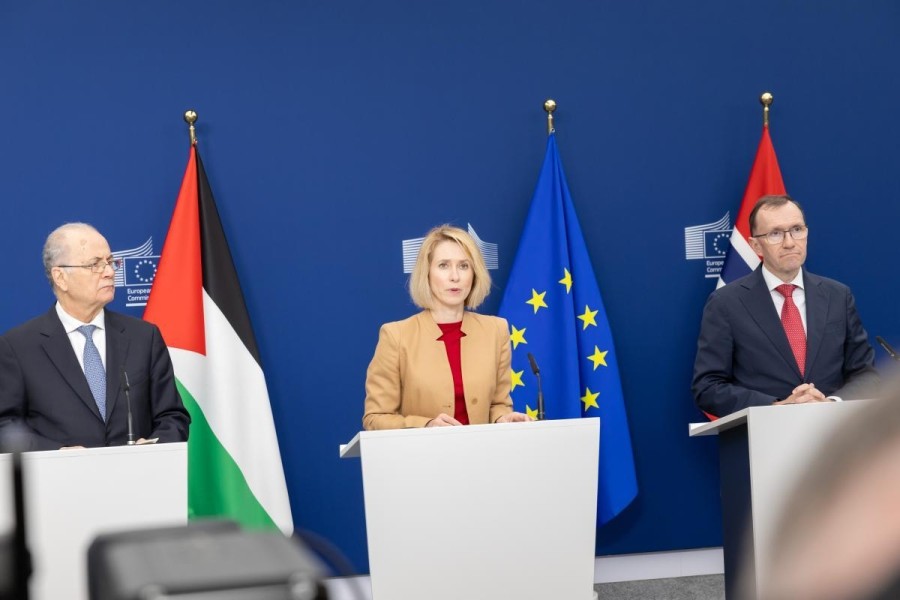
BRUSSELS, Monday, April 20, 2026 (WNP): The European Union remains divided over imposing sanctions on Israeli settlers, with High Representative Kaja Kallas acknowledging internal disagreements while indicating a potential policy review following political changes in a member state.
Responding to questions during a press interaction after the Ad Hoc Liaison Committee meeting, Kallas said that 26 out of the EU’s 27 member states support sanctions against violent settlers, but consensus has been blocked due to opposition from one country.
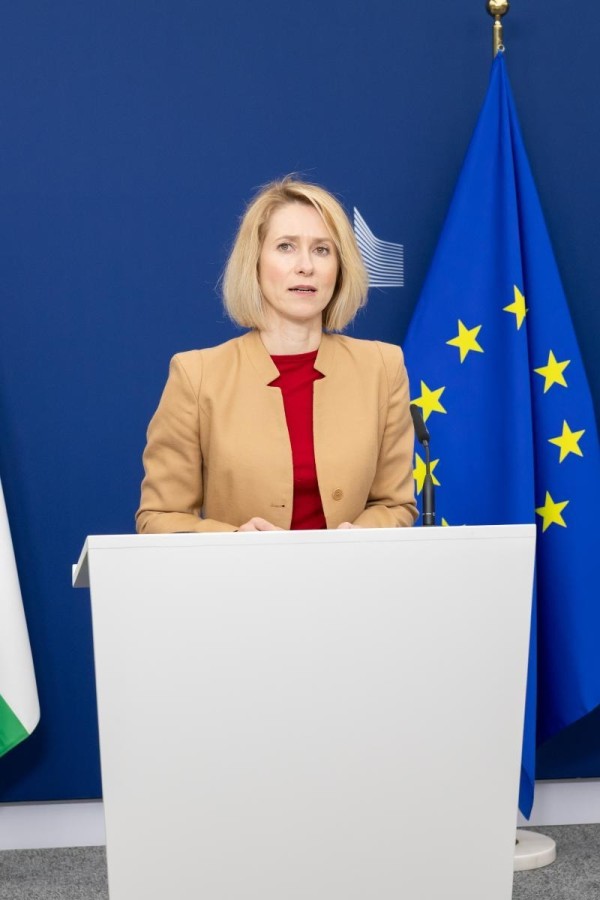
“Because of our working methods, unanimity is required. So far, the one opposing has had the upper hand,” she said, adding that upcoming changes in that country’s government could open the door for reconsideration.
Kallas confirmed that discussions are ongoing regarding possible measures to increase pressure on Israel, including proposals by Spain, Slovenia and Ireland to partially or fully suspend the EU-Israel Association Agreement.
She noted that while such a move would require unanimity, other measures requiring only a qualified majority could be explored if member states agree. “This is what we are going to discuss tomorrow,” she said, declining to pre-empt the outcome.
Addressing criticism over alleged double standards in EU foreign policy, Kallas defended the bloc’s role as the largest supporter of Palestinians, including funding for the Palestinian Authority and humanitarian assistance through agencies such as UNRWA.
She acknowledged concerns over Israel’s withholding of Palestinian tax revenues, stressing that the EU has consistently raised the issue with Israeli authorities.
“We have been very clear that these revenues belong to the Palestinians,” Kallas said, adding that while the EU cannot compel Israel to release the funds, it continues to press the matter in diplomatic engagements and with international partners.
On governance and reforms, Kallas reiterated EU support for strengthening Palestinian institutions, noting that financial assistance is coupled with technical support to advance reform efforts.
Responding to a question on a proposed “Board of Peace” initiative associated with former US President Donald Trump, Kallas said the EU would not join the initiative in its current form, citing concerns that it does not align with provisions outlined in relevant United Nations Security Council resolutions.
She emphasized that any peace mechanism must ensure a central role for Palestinians and remain consistent with internationally agreed frameworks.
“Building a Palestinian state must be Palestinian-led and Palestinian-owned,” Kallas said.
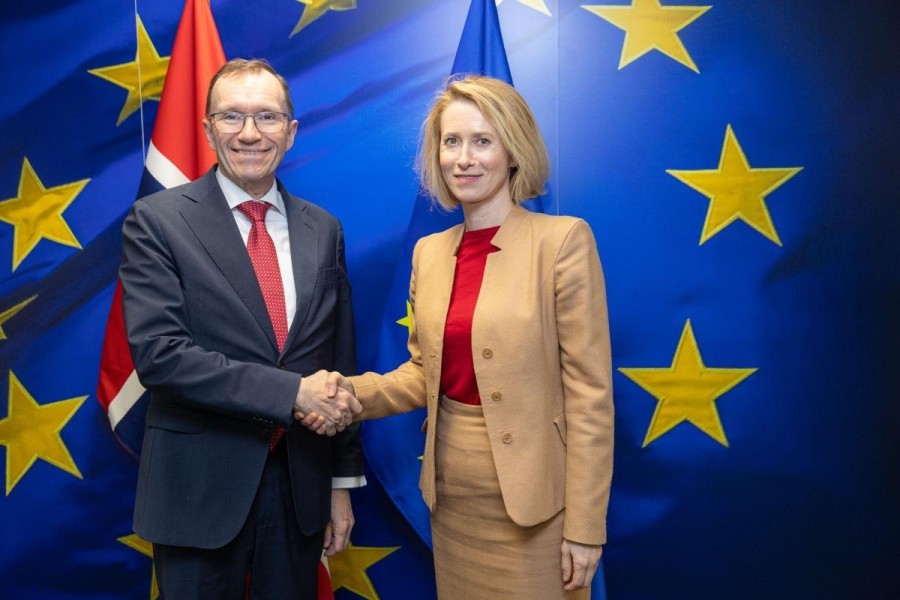
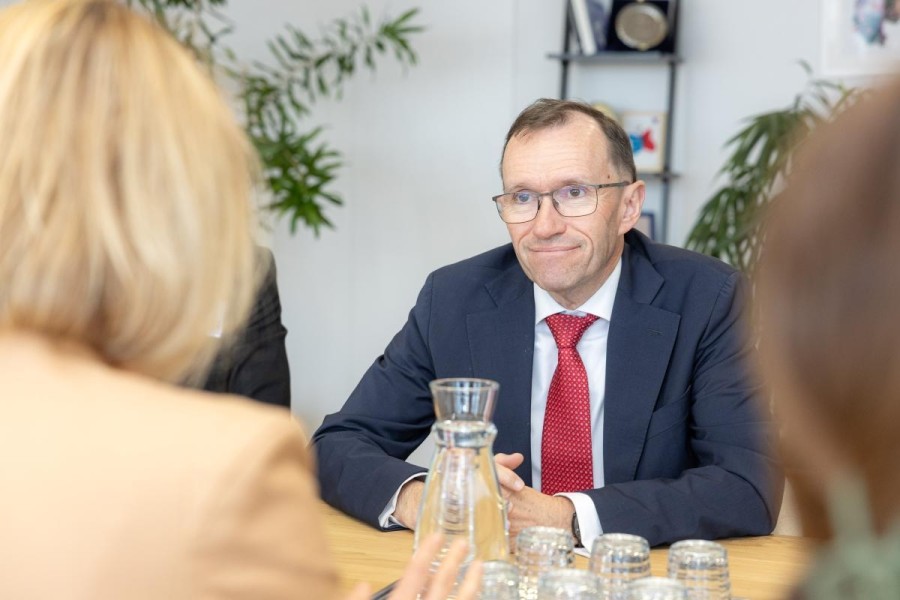
The remarks came as EU officials, along with Norwegian Foreign Minister Espen Barth Eide and Palestinian Prime Minister Mohammad Mustafa, met in Brussels to discuss political developments, governance reforms and reconstruction needs in Gaza and the West Bank.