President underscores Kingdom’s security and defence, highlights Makkah Alliance for Defence, appreciates Saudi financial and oil-supply assistance

ISLAMABAD, Wednesday, October 14, 2026 (WNP): President Asif Ali Zardari has reaffirmed Pakistan’s commitment to the security and defence of the Kingdom of Saudi Arabia, underscoring the close strategic partnership between the two brotherly countries while receiving the credentials of Saudi Arabia’s Ambassador-designate, Dr. Rajeh Tami Albugamy, at Aiwan-e-Sadr.
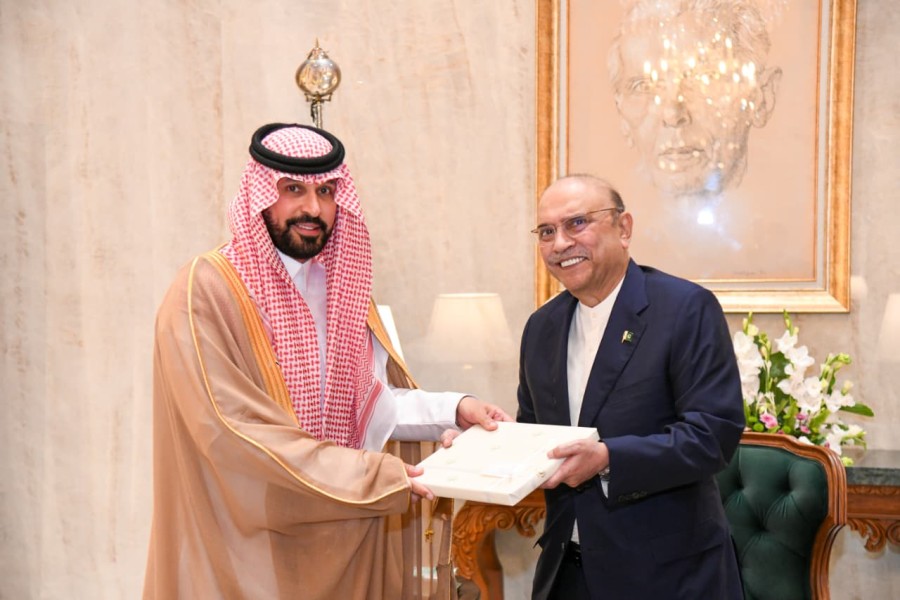
The President welcomed the Saudi envoy and congratulated him on his appointment, expressing confidence that bilateral relations would reach new heights during his diplomatic tenure.
During the meeting, President Zardari highlighted the importance of the Makkah Alliance for Defence and the institutional mechanisms underpinning Pakistan-Saudi cooperation. He emphasised the need to further deepen economic ties and appreciated Saudi Arabia’s financial support and assistance with oil supplies.
The President also acknowledged the valuable contribution of the Pakistani community in the Kingdom, highlighting its role in strengthening the longstanding bonds between the two countries.
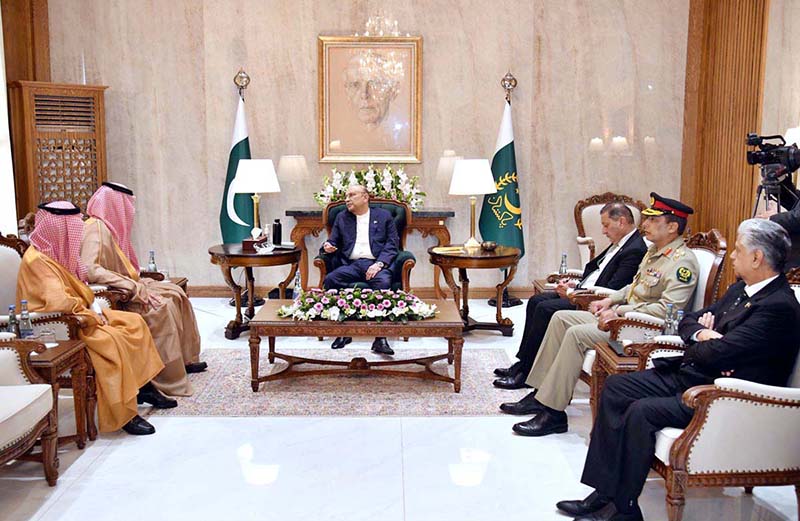
Reaffirming Pakistan’s commitment to its strategic partnership with Saudi Arabia, President Zardari expressed confidence that the two countries would continue to expand cooperation in areas of mutual interest and further strengthen their historic relationship.
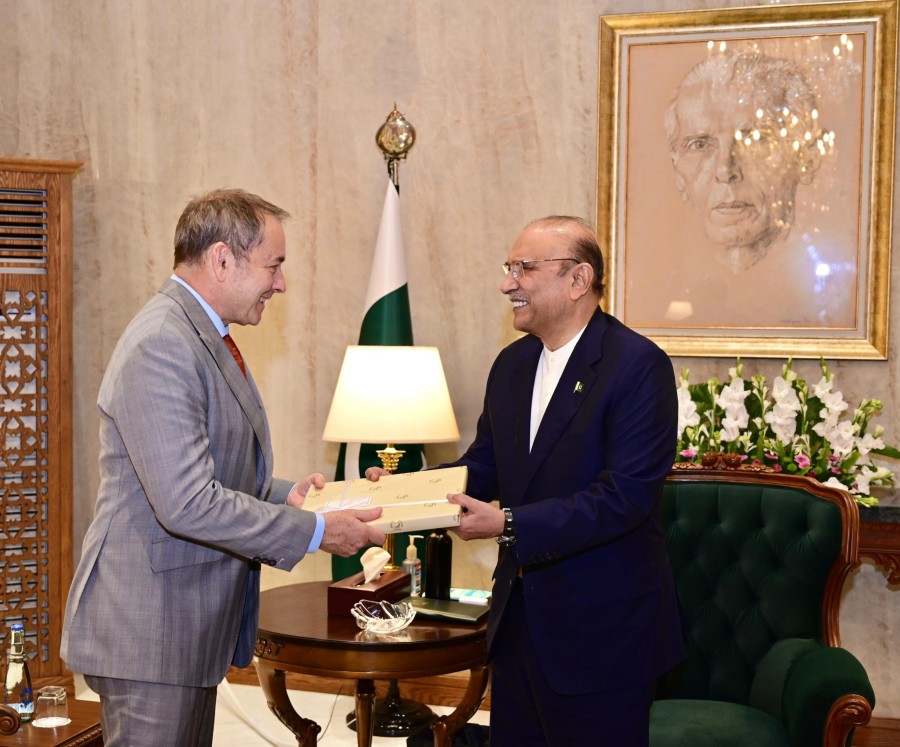
Earlier, the President also received the credentials of France’s Ambassador-designate, Jean-Noël Poirier, and wished both ambassadors success in their diplomatic assignments.
During his meeting with the French envoy, President Zardari reaffirmed Pakistan’s commitment to strengthening longstanding relations with France through regular dialogue and broader cooperation.
He emphasised multilateralism, high-level exchanges and an independent bilateral relationship, while highlighting opportunities to enhance trade, investment, parliamentary exchanges, educational and cultural links, and defence cooperation.