Tashkent promotes new mechanisms for trade, investment, industrial cooperation, transport connectivity, digital economy, green development and financial integration across Turkic world
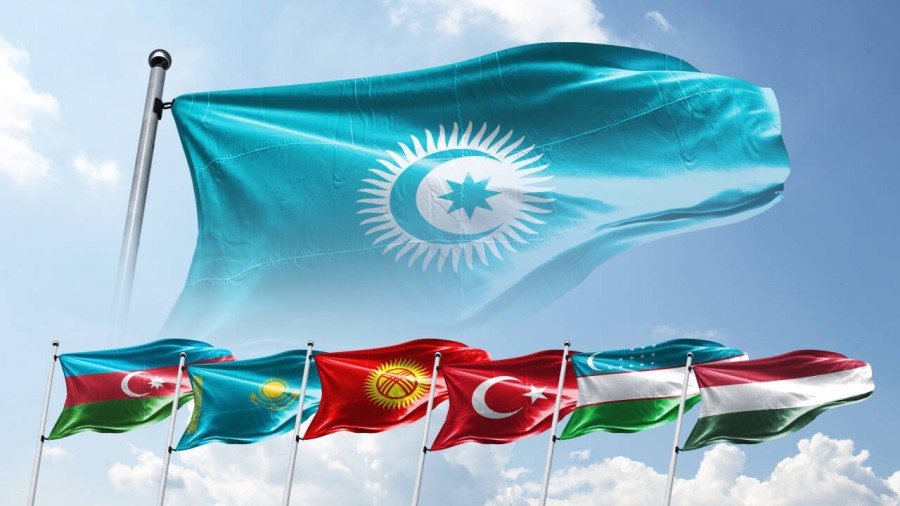
TASHKENT, Saturday, October 3, 2026 (WNP): Uzbekistan is playing an active role in advancing economic integration within the framework of the Organization of Turkic States (OTS), promoting practical mechanisms and joint initiatives aimed at strengthening trade, investment, industrial cooperation, transport connectivity, digital transformation and green development across the Turkic world.
The combined economic potential of OTS member states exceeds $2.1 trillion, while their economies grew by 6.8 percent in 2025. Uzbekistan’s trade turnover with OTS countries reached $10.8 billion during the same year, highlighting the considerable scope for further economic cooperation.
A key element of Uzbekistan’s approach is its emphasis on translating economic initiatives into concrete mechanisms and projects. Practical cooperation is currently being pursued in more than 35 areas within the Organization.
Uzbekistan has proposed establishing a “Space of New Economic Opportunities” to bring together favorable conditions for trade, business and mutual investment, supported by an appropriate legal and infrastructure framework.
The country has also proposed the establishment of a Permanent Council on Economic Partnership of the Turkic States, with its Project Office in Tashkent, as a mechanism to facilitate the systematic preparation and implementation of economic initiatives.
Another major proposal is the creation of a Turkic States Industrial Alliance, aimed at promoting cooperation in mechanical engineering, electrical engineering, mining, petrochemicals, pharmaceuticals, textiles, food processing and construction materials.
Under this approach, the principle of “raw materials – processing – science and technology – finished products” could support the development of regional production chains, enabling producers to move toward higher value-added products and broader export markets.
For landlocked Uzbekistan, transport connectivity remains a strategically important component of economic integration.
The development of the Middle Corridor, together with its connection to the China-Kyrgyzstan-Uzbekistan railway project, could open additional opportunities for trade and regional connectivity.
In the longer term, linking these transport networks with the Trans-Afghan Corridor could further enhance Central Asia’s role as a bridge connecting the markets of East and South Asia, the Caucasus, Türkiye and Europe.
Deepening economic integration also requires financial institutions capable of supporting joint projects.
The establishment of the Turkic Investment Fund represents an important development in this direction, with its focus on trade and economic cooperation, joint projects and support for small and medium-sized enterprises.
The Fund’s operational activities, together with the OTS Council of Central Bank Governors and the Turkic Council for Green Finance, are contributing to the development of financial infrastructure for closer economic cooperation.
Uzbekistan has proposed closer cooperation between the Turkic Investment Fund and international financial institutions, including the Islamic Development Bank and the European Bank for Reconstruction and Development, as well as other international and national financing institutions.
Such cooperation could help combine OTS resources with international capital to support infrastructure, industrial, energy and green-development projects.
The digital economy and artificial intelligence are also emerging as major areas of potential cooperation among Turkic states.
At the informal OTS summit in Turkistan in 2026, Uzbekistan proposed establishing a strategic cooperation network in artificial intelligence and developing a “Digital Turkic Corridor Concept.”
The initiative envisages connecting regional data centers through high-speed communication networks, developing an integrated digital environment and creating new opportunities for technology-based services.
For Uzbekistan, this could complement its role as a regional transport hub with an expanding role in digital transit and data exchange.
Economic cooperation within the OTS is also expanding into renewable energy, green hydrogen and ammonia, critical minerals, organic agriculture and environmental technologies.
Uzbekistan has proposed a “Green Transformation” Consortium to facilitate joint green-energy projects, technology and standards cooperation and greater use of public-private partnerships.
In the critical minerals sector, the focus is increasingly shifting from the export of raw materials toward deeper processing and the production of higher value-added goods.
The agricultural potential of OTS countries, combined with diverse climatic conditions and proximity to major consumer markets, also offers opportunities for new regional production and export chains.
Uzbekistan has proposed combining scientific research, breeding, production and logistics capabilities and, in the future, promoting agricultural products on international markets under a common brand.
Economic cooperation within the Organization of Turkic States is entering a broader phase in which trade growth is being complemented by industrial cooperation, mutual investment, transport and digital connectivity, energy partnerships and new financial mechanisms.
For Uzbekistan, these initiatives provide opportunities to deepen its integration into regional value chains, expand access to international markets and attract investment while contributing to the development of a more interconnected and diversified economic space across the Turkic world.