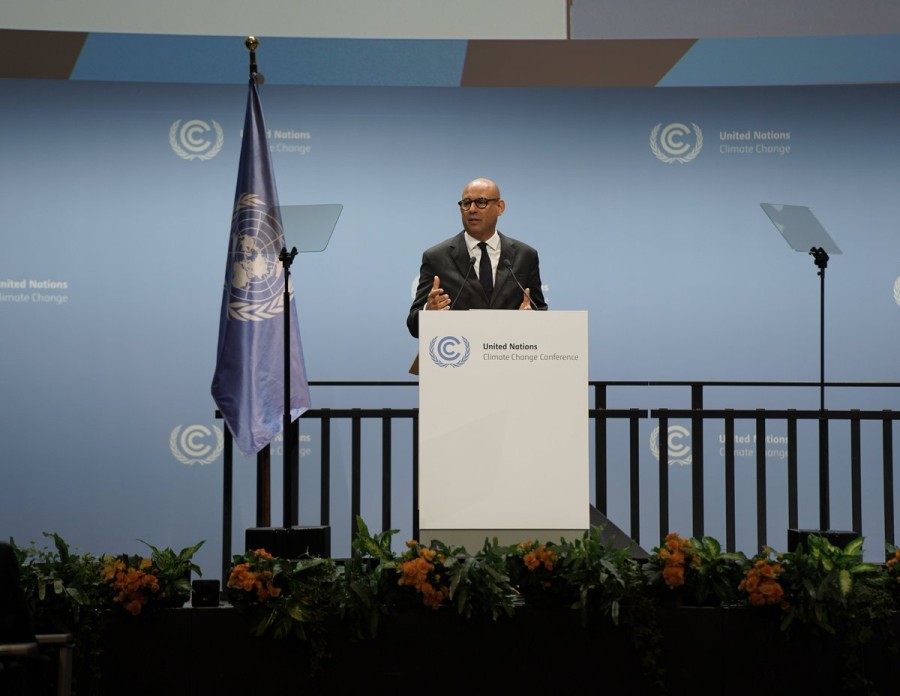
BONN, Monday, June 8, 2026 (WNP): United Nations Climate Change Executive Secretary Simon Stiell on Monday called for urgent acceleration of global climate action, warning that continued dependence on fossil fuels is driving economic instability, inflation and growing climate-related disasters worldwide.
Addressing delegates at the opening plenary of the Bonn Climate Change Conference (SB64), Stiell urged governments to focus on implementing existing commitments under the Paris Agreement rather than reopening previously settled negotiations.
“Tackling the global climate crisis is the hardest, but most important thing humanity has ever tried to do together,” Stiell said. “People around the world need this process to keep delivering, and at increasing speed and scale.”
The annual Bonn meetings, which run from June 8 to 18, serve as a critical preparatory session ahead of the 31st United Nations Climate Change Conference (COP31), scheduled to take place in Antalya, Türkiye, later this year.
Stiell acknowledged that while the world remains far from achieving its climate goals, progress made through international cooperation is beginning to yield results.
“We are not where we need to be. But we are somewhere we have never been before,” he said, crediting negotiators for overcoming political differences and maintaining momentum on climate action.
He stressed that the coming years would be crucial in ensuring that countries remain on track to meet the objectives of the Paris Agreement and deliver stronger commitments during future global stocktakes.
The UN climate chief highlighted the growing urgency of climate action amid rising temperatures, extreme weather events and geopolitical instability.
He pointed to deadly heatwaves, climate-driven El Niño impacts and ongoing conflict in the Middle East as examples of interconnected crises affecting global economies and populations.
“As deadly heat kills thousands in a single day and as conflict in the Middle East causes immense human suffering and sparks a fossil fuel cost crisis that is strangling economies everywhere, the imperative to accelerate climate action has never been clearer,” Stiell said.
He warned that continued reliance on fossil fuels exposes countries to inflationary shocks, economic volatility and energy insecurity.
“It is crystal clear that continuing our fossil fuel dependency means continuing to import inflation and economic instability while exporting energy security, sovereignty and policy autonomy,” he said.
Stiell emphasized that the international climate process must increasingly focus on implementation and practical outcomes.
He called for reforms aimed at streamlining climate negotiations, improving access to climate finance and reducing reporting burdens on developing countries.
According to Stiell, Parties have raised concerns about the complexity of existing procedures and the need for more efficient mechanisms to support climate action on the ground.
“The Secretariat will always be there to advise and support you. But ultimately, it is your process and your decisions to make,” he told delegates.
The Executive Secretary outlined several priority areas for discussion during the two-week conference, including:
- Advancing the Global Goal on Adaptation and the Belém Adaptation Indicators;
- Delivering outcomes from the first Global Stocktake;
- Developing mechanisms to support a just transition;
- Strengthening climate finance arrangements and the Adaptation Fund;
- Reviewing implementation-focused work programmes under the UN climate framework.
He stressed that negotiations remain central to helping countries accelerate implementation of climate commitments and adapt to the growing impacts of climate change.
Stiell also urged governments to strengthen links between climate negotiations and real-world economic decision-making.
He welcomed efforts to elevate the Global Climate Action Agenda, which brings together governments, businesses, investors, cities and civil society organizations to advance climate solutions beyond formal negotiations.
The UN climate chief commended the incoming COP31 Presidency of Türkiye, working alongside Australia, for building upon the framework established during COP30 and aligning climate action with the implementation of Global Stocktake outcomes.
He encouraged delegates to use the Action Agenda to address practical challenges, including energy security, food security, urban resilience, waste reduction and methane emissions.
The Bonn conference is expected to play a pivotal role in shaping negotiations leading up to COP31 in Antalya, where governments will seek to accelerate implementation of climate commitments and strengthen international cooperation.
Stiell concluded by urging negotiators to use the Bonn meetings to deliver meaningful progress. “The hard work continues,” he said. “Make these two weeks count.”
The Bonn Climate Change Conference brings together representatives of governments, international organizations, financial institutions and civil society as part of ongoing efforts to implement the Paris Agreement and advance global climate ambitions in the face of mounting environmental and economic challenges.