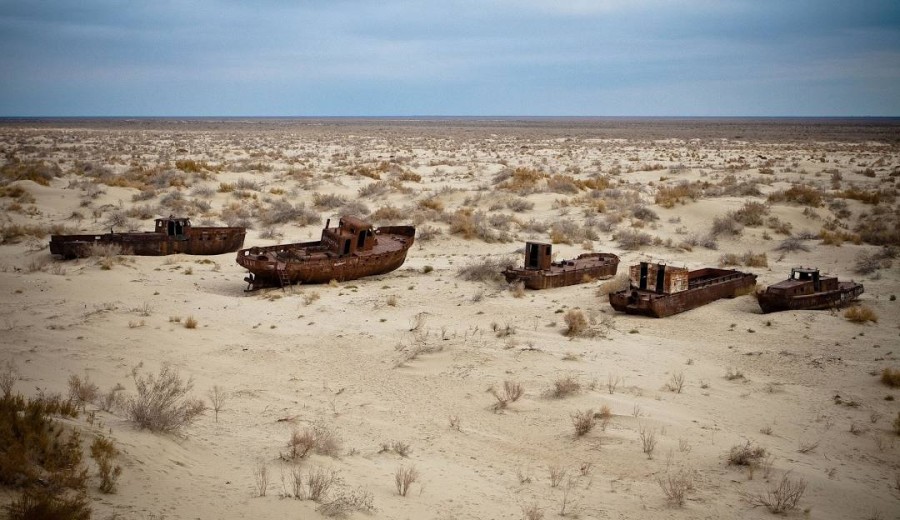
MUYNAK, Monday, April 20, 2026 (WNP): A new desert ecosystem has emerged on the dried seabed of the Aral Sea, now known as the Aralkum Desert, according to research conducted by the Institute of Zoology of the Academy of Sciences of the Republic of Uzbekistan.
Once the largest lake in Central Asia in the early 20th century, the Aral Sea began to rapidly shrink in the second half of the century. The retreat of its waters led to the formation of a vast desert landscape covering more than 60,000 square kilometers, now recognized as one of the largest human-made desert ecosystems in the region.
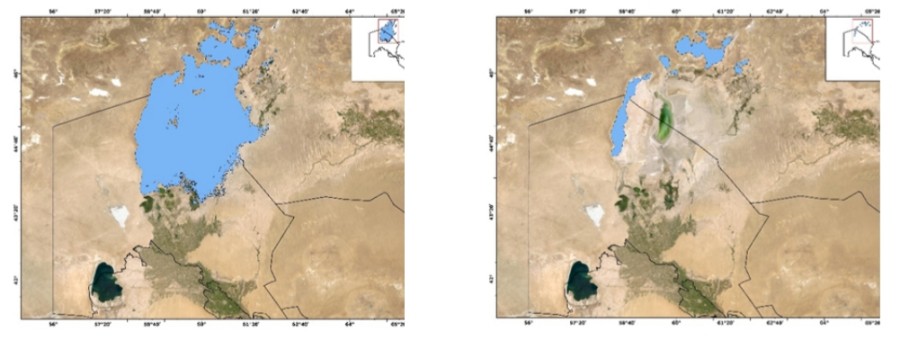
Scientists say the transformation has significantly altered local climate conditions, soil composition, and biodiversity. Species adapted to wetland environments have sharply declined, while new ecological communities, particularly bird populations, have adapted to the emerging desert environment between the Ustyurt Plateau and the Kyzylkum Desert.
The findings are part of an ongoing applied research project titled “Current State of the Aralkum Avifauna, Species Adaptation to Environmental Changes, and Conservation Measures,” implemented by the Institute of Zoology under the Academy of Sciences. The project, funded since 2025 under the country’s national innovation program, aims to assess bird diversity, habitat distribution, and adaptation mechanisms in the newly formed ecosystem.
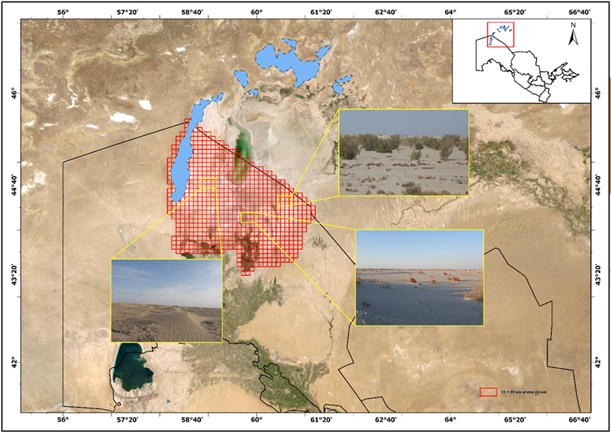
As part of the study, researchers conducted field expeditions in the Muynak district of Karakalpakstan in October–November 2025. Using ArcGIS-based grid mapping, ornithological surveys were carried out across 68 grid cells, including 56 transect surveys covering 140 kilometers and 12 point-count stations.
The research identified six major biotopes in the Aralkum Desert: saline, sandy, stony and gravelly, clay, and hilly (chink) desert zones, along with remnant water bodies and artificial reservoirs formed by drainage systems.
A total of 91 bird species belonging to 12 orders and 26 families were recorded across these habitats. Among them, 13 species are listed in the Red Data Book of Uzbekistan, including the mute swan (Cygnus olor), greater flamingo (Phoenicopterus roseus), saker falcon (Falco cherrug), and golden eagle (Aquila chrysaetos).
Additionally, several species are included in the International Union for Conservation of Nature (IUCN) Red List, CITES appendices, and the Convention on Migratory Species (CMS) lists.
Researchers found that sandy desert zones along the eastern edge of the Ustyurt Plateau support the highest bird diversity, benefiting from transitional ecosystems between desert and steppe landscapes. Hills and escarpments were also identified as important seasonal habitats for multiple species.
In contrast, saline and clay deserts showed the lowest species diversity, supporting only highly specialized birds adapted to extreme arid conditions. The study also noted that artificial reservoirs in southern areas play a critical role as wetland habitats for water-dependent bird species, while the remaining natural lake areas of the Aral Sea have limited ecological significance for waterfowl.
The researchers concluded that the Aralkum Desert, formed over a relatively short historical period, represents a unique and evolving ecosystem. The distribution and diversity of bird species are closely linked to the region’s diverse biotopes, with sandy desert areas showing the richest ornithological presence.
The findings, experts say, provide an important scientific basis for identifying key habitats and developing targeted conservation measures in the Aralkum region.