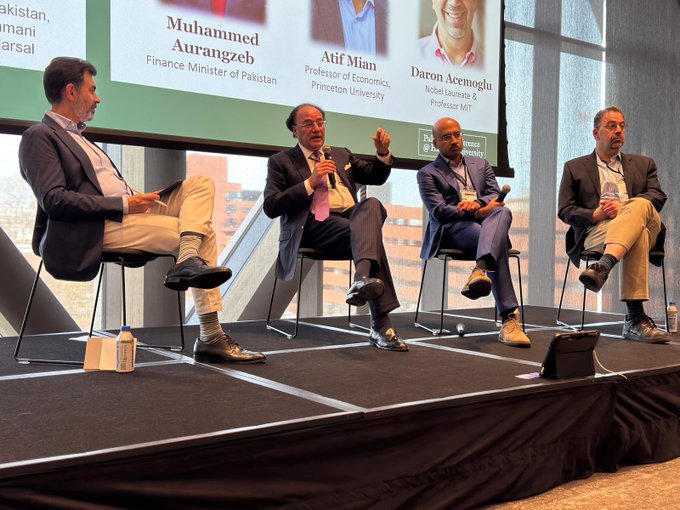
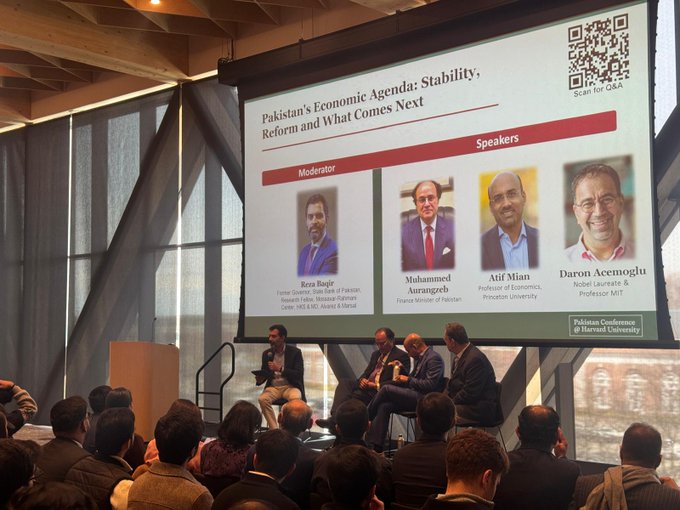
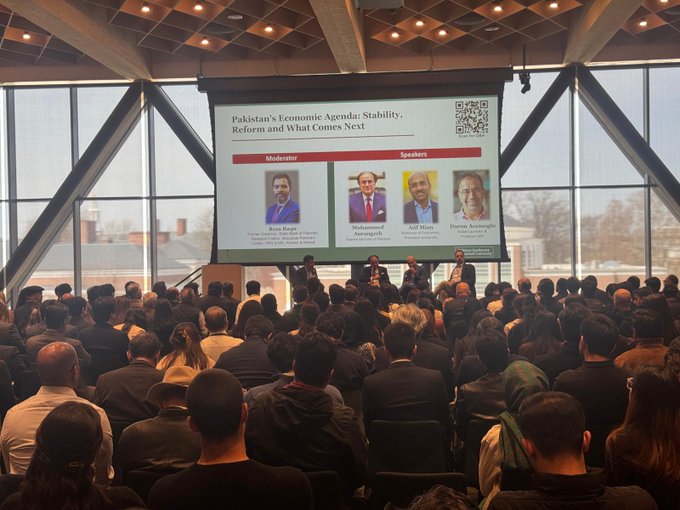
CAMBRIDGE, Sunday, April 12, 2026 (WNP): Federal Minister for Finance and Revenue Senator Muhammad Aurangzeb highlighted Pakistan’s reform priorities and economic strategy during a high-level panel discussion at Harvard University, held under the theme “Pakistan’s Economic Agenda: Stability, Reform and What Comes Next” at the Pakistan Conference 2026.
The session was moderated by Reza Baqir and featured prominent economists including Atif Mian of Princeton University and Nobel laureate Daron Acemoglu of MIT, bringing together policymakers, experts, and members of the Pakistani diaspora.
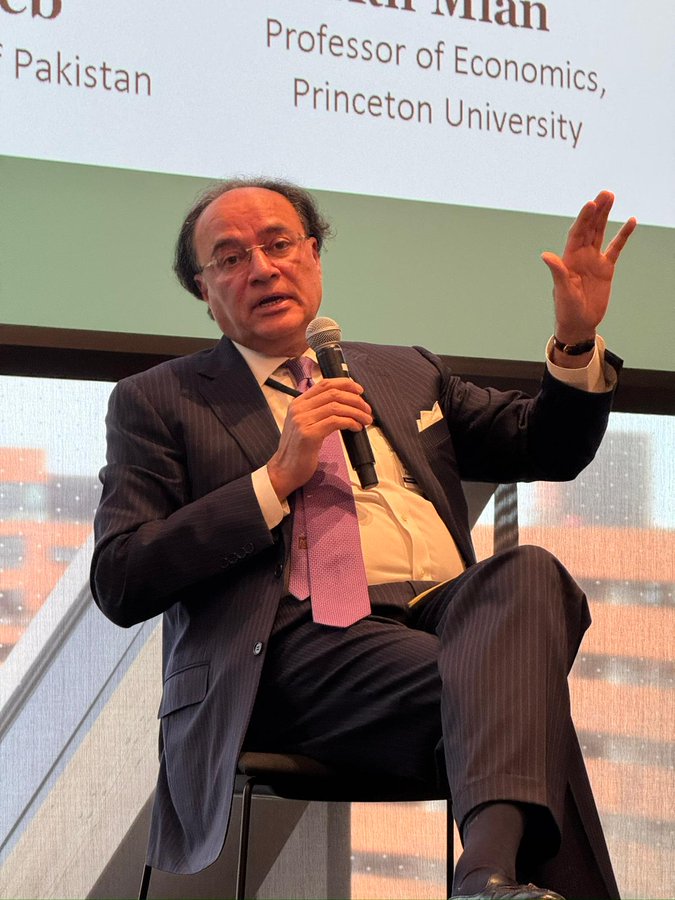
In his remarks, the finance minister described the ongoing tensions in the Middle East as a major global supply shock, noting that Pakistan had ensured uninterrupted energy supplies across key sectors through coordinated efforts despite limited reserves.
He said the government initially introduced broad-based subsidies to cushion the public from rising energy costs, which have since transitioned to targeted support aligned with fiscal capacity. He added that Pakistan managed the situation relatively well, avoiding major supply disruptions.
On the external front, Aurangzeb highlighted strong debt management, stating that a recent Eurobond repayment was a “non-event,” and expressed confidence in meeting upcoming obligations.
Pointing to emerging opportunities, he noted a sharp increase in transit flows through Karachi Port and progress toward operationalizing Gwadar Port, alongside record inflows under the Roshan Digital Account initiative, reflecting renewed confidence among overseas Pakistanis.
However, he emphasized that remittances cannot serve as a long-term growth model, advocating for export-led growth and expansion in trade in services as sustainable drivers of economic resilience.
The finance minister acknowledged that while Pakistan understands the “what” and “why” of reforms, the real challenge lies in effective implementation, stressing the need for timely decision-making to avoid recurring economic cycles.
Reaffirming the government’s reform agenda, he highlighted efforts to improve tax administration, broaden the tax base, and enhance the tax-to-GDP ratio, alongside ongoing digitization and automation within the Federal Board of Revenue.
He also stressed the need to move away from reliance on subsidies, advocating for competitiveness and trade liberalization, including tariff rationalization to integrate Pakistan more effectively into global markets.
Highlighting progress in the energy sector, Aurangzeb said renewable energy capacity, particularly solar, had reached around 8,000 MW, helping cushion the economy against external shocks, with plans to expand its share further.
The minister pointed to key reform milestones, including agriculture income tax legislation passed by all four provinces and progress on privatization, with 27 state-owned enterprises referred to the Privatization Commission.
Looking ahead, he identified population growth and climate change as critical long-term challenges, stressing the need for comprehensive strategies to ensure sustainable economic progress.
The discussion underscored Pakistan’s commitment to transparency, reform, and engagement with global stakeholders on its economic future.