
TASHKENT, Thursday, October 30, 2025 (WNP): Head of Department at the International Institute for Central Asia, Azamat Toshev, said that Uzbekistan’s growing engagement within the United Nations system reflects its evolution into a key driver of regional cooperation and global dialogue, as the world body marks its 80th anniversary amid geopolitical and economic challenges.
Toshev noted that this milestone comes at a time of “profound transformation” in the international order, where the UN once again serves as a vital platform for dialogue amid escalating conflicts, widening inequalities, and rapid technological shifts.
For Uzbekistan, he said, the anniversary session of the UN General Assembly represented more than diplomacy — it was a statement of its “new international standing” as an initiator of both regional and global processes.
Since joining the UN in 1992, Uzbekistan has grown from a newly independent state into a recognized global partner. The country now hosts 25 UN offices and agencies implementing over 160 projects worth more than $175 million, covering education, healthcare, gender equality, poverty reduction, digital transformation, and sustainable development.
According to Toshev, Uzbekistan’s foreign policy underwent a strategic shift in 2016 under President Shavkat Mirziyoyev, focusing on openness, dialogue, and good-neighborliness. “From that moment, Tashkent began shaping its own regional agenda,” he said, pointing to the President’s vision of transforming Central Asia into a “zone of sustainable development, mutual trust, and partnership.”
The 2017 Samarkand Conference, held under UN auspices, became a turning point — introducing the concept of the “Samarkand Spirit,” which promotes equality, mutual benefit, and open regional dialogue. Its outcomes laid the foundation for the UN General Assembly resolution on strengthening cooperation for peace and stability in Central Asia — the first time the region was presented as a united geopolitical space.
Since then, Uzbekistan has initiated 13 UN General Assembly resolutions on issues including sustainable tourism, the Aral Sea environment, connectivity between Central and South Asia, drug control, and regional development. This, Toshev said, reflects the country’s transition “from participation to creation — from national policy to regional strategy.”
President Mirziyoyev’s recent address to the 80th UN General Assembly session underscored this proactive stance. His proposals included an ECOSOC- and UNCTAD-led international forum on Central Asian economies, a UNIDO-backed regional hub for green technologies, a global program on rational water use, and a World Forum on Water Conservation to be hosted in Uzbekistan.
He also called for a UN resolution on developing international transport and energy corridors through Afghanistan, framing connectivity as a tool for both economic growth and regional stabilization. Additionally, he proposed creating a regional office of the UN Counter-Terrorism Office, launching a World Youth Movement for Peace, and organizing a World Summit on Vocational Education — all aimed at promoting a “sustainable architecture of peace founded on education and humanism.”
On the sidelines of the General Assembly, President Mirziyoyev met UN Secretary-General António Guterres to discuss deepening cooperation under a new five-year program. Guterres praised Uzbekistan’s growing leadership within the UN, highlighting its initiatives on digital innovation, youth empowerment, the Sustainable Development Goals, and the promotion of enlightened Islam.
Toshev emphasized that Uzbekistan’s “multi-vector diplomacy,” grounded in pragmatism and mutual respect, has allowed it to strengthen regional resilience rather than dependence on global powers. This approach, he said, represents a model of “smart regionalism” — blending domestic modernization with international engagement.
He added that Uzbekistan’s initiatives, such as the UN Multi-Partner Human Security Trust Fund for the Aral Sea Region and the promotion of “green” technologies, demonstrate the country’s shift from national reform to international responsibility. Tashkent is also advocating for reforms in the UN system, including expanding the Security Council to ensure greater representation for developing nations.
“The 80th session of the UN General Assembly confirmed that Central Asia is no longer a periphery but a rising center of regional resilience — with Uzbekistan at its core,” Toshev remarked.
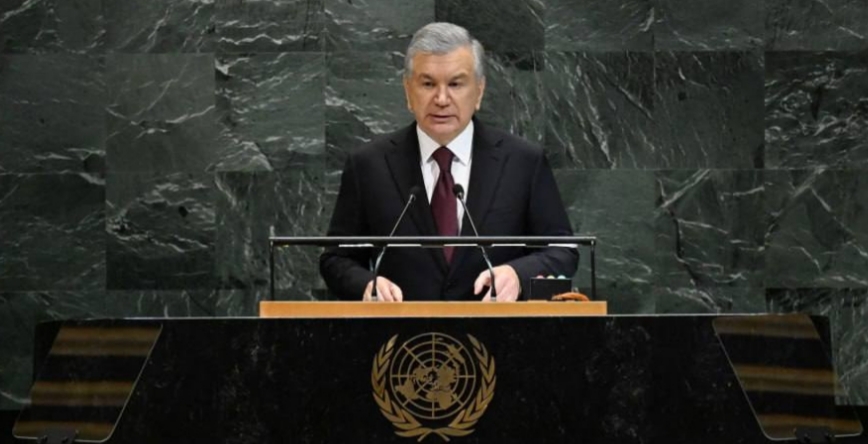
“Under President Mirziyoyev’s leadership, Uzbekistan has moved from observing global change to shaping it — offering a concrete roadmap based on cooperation, technology, environmental stewardship, and youth engagement.”
He concluded that Uzbekistan’s diplomacy exemplifies how Central Asia, once seen as a geopolitical crossroads, is emerging as “a source of stability and shared progress — shaping a new culture of international cooperation built on trust, responsibility, and common purpose.”