By Abduaziz Khidirov
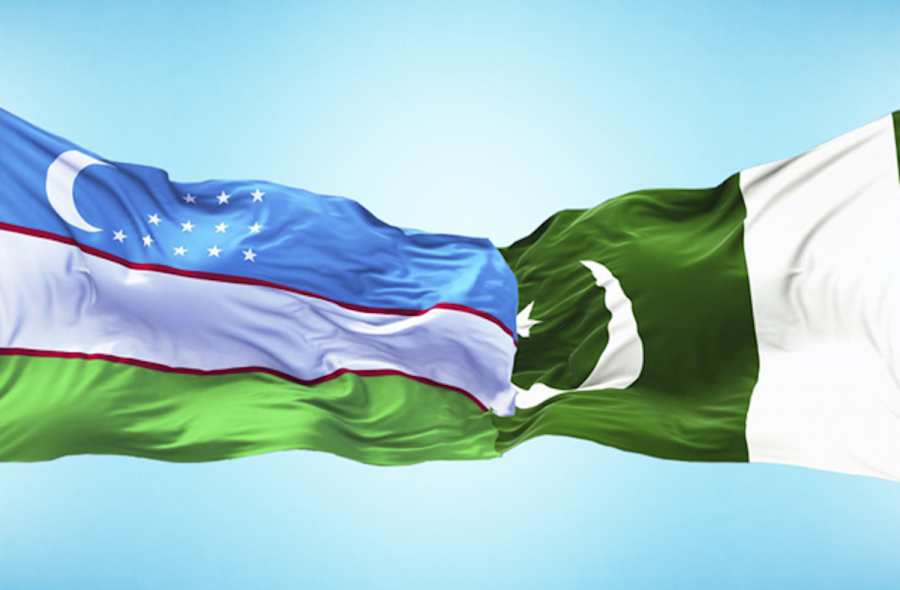
TASHKENT, Monday, January 26, 2026 (WNP): Uzbekistan and Pakistan are poised to enter a new phase of strategic partnership as preparations intensify for the state visit of Uzbek President Shavkat Mirziyoyev to Pakistan in February 2026, a visit widely seen as a turning point in bilateral economic and political relations.
The high-level talks are expected to build on a rapidly expanding political dialogue and focus squarely on translating goodwill into concrete economic outcomes.
At the center of the agenda is an ambitious goal: raising bilateral trade from current levels to $2 billion in the coming years, with an interim target of $1 billion in the near term.
Officials on both sides acknowledge that while trade volumes have grown steadily, they remain well below the true potential of the two economies. By the end of 2024, bilateral trade stood at $404 million, rising to $434.4 million during January–November 2025—an increase of nearly 17 percent year-on-year and 22 percent compared to the same period in 2023. Despite this momentum, leaders agree that further growth requires a fundamental shift from traditional commodity trade to deeper industrial cooperation and integrated value chains.
The forthcoming talks aim to move beyond simple exchanges of goods toward joint industrial ventures, high-tech manufacturing, and long-term cooperation frameworks.
A key instrument in this transition is the expansion of the Preferential Trade Agreement (PTA), signed in March 2022. Negotiations are underway to broaden the PTA’s scope from 17 products to nearly 100, significantly lowering tariff barriers and improving market access for exporters on both sides.
In parallel, both governments are advancing digital integration measures to streamline trade. Plans include launching an Electronic Data Interchange (EDI) system between customs authorities, enabling real-time data sharing, reducing paperwork, and minimizing border delays. Efforts are also being made to harmonize sanitary, phytosanitary, and quarantine standards—an area often cited by businesses as a major non-tariff barrier.
A major breakthrough expected in 2026 is the opening of a branch of the National Bank of Pakistan (NBP) in Uzbekistan. According to Uzbek officials, the move will address long-standing challenges related to cross-border payments and trade financing, which have previously forced businesses to rely on third-country banking channels.
Preparatory work is already well advanced. In April 2025, delegations from the Central Bank of Uzbekistan and leading commercial banks held talks in Karachi with the State Bank of Pakistan and major financial institutions, laying the groundwork for correspondent banking arrangements and regulatory alignment. The new financial infrastructure is expected to significantly reduce transaction costs, especially for small and medium-sized enterprises.
Textiles are emerging as a flagship sector of bilateral cooperation. Uzbekistan’s drive to deepen cotton processing and attract $2 billion in foreign investment aligns closely with Pakistan’s strengths in garment manufacturing and global textile marketing. More than 130 joint ventures with Pakistani capital are already operating in Uzbekistan, and further partnerships are being explored through engagements with the All Pakistan Textile Mills Association (APTMA).
Pharmaceuticals represent another strategic frontier. With Uzbekistan importing around $3 billion worth of medicines annually, the government is encouraging local production through incentives and special economic zones such as Tashkent Pharma Park. Pakistani firms have shown strong interest, with companies like Novugen Pharma already operational and cooperation agreements signed with Bio Labs and Caraway Pharmaceuticals.
Beyond these sectors, opportunities are expanding in leather and footwear, mining—particularly copper development with the Almalyk Mining and Metallurgical Complex—and the manufacture of agricultural machinery and electrical equipment. These projects are designed not only to serve domestic markets but also to target Central Asian, South Asian, and CIS markets.
Agriculture remains a cornerstone of bilateral trade, underpinned by strong complementarities. Pakistan is one of the largest markets for Uzbek fruit and vegetables, accounting for nearly 20 percent of exports in early 2025. Uzbekistan plans to expand shipments of fresh and processed produce, while Pakistan is increasing exports of mangoes, mandarins, rice, potatoes, and chilled meat to the Uzbek market.
Cooperation is also extending into agricultural research and innovation. Talks are underway to formalize a Memorandum of Understanding between Uzbekistan’s Ministry of Agriculture and the Pakistan Agricultural Research Council (PARC), covering seed development, breeding, and advanced farming technologies. Joint projects under discussion include aeroponic potato cultivation, frost-resistant olive varieties, and high-yield livestock breeds.
The broader strategic vision underpinning these initiatives is the Trans-Afghan railway project, now at the feasibility study stage. Leaders in Tashkent and Islamabad view the railway not merely as a transport link but as a catalyst for regional geo-economic transformation. Direct rail access to Karachi and Gwadar ports would significantly reduce logistics costs for landlocked Uzbekistan, while positioning Pakistan as a key transit hub connecting Central and South Asia.
The February 2026 visit is also expected to formalize the launch of the Supreme Council of Strategic Partnership, with its inaugural meeting scheduled later in the year. The new mechanism is designed to institutionalize cooperation, monitor implementation of agreements, and ensure sustained momentum in bilateral ties.
As Uzbekistan and Pakistan move from political trust-building to pragmatic economic integration, officials on both sides see the partnership evolving into a durable model of regional cooperation—anchored in infrastructure, finance, industrial collaboration, and a shared commitment to long-term growth.