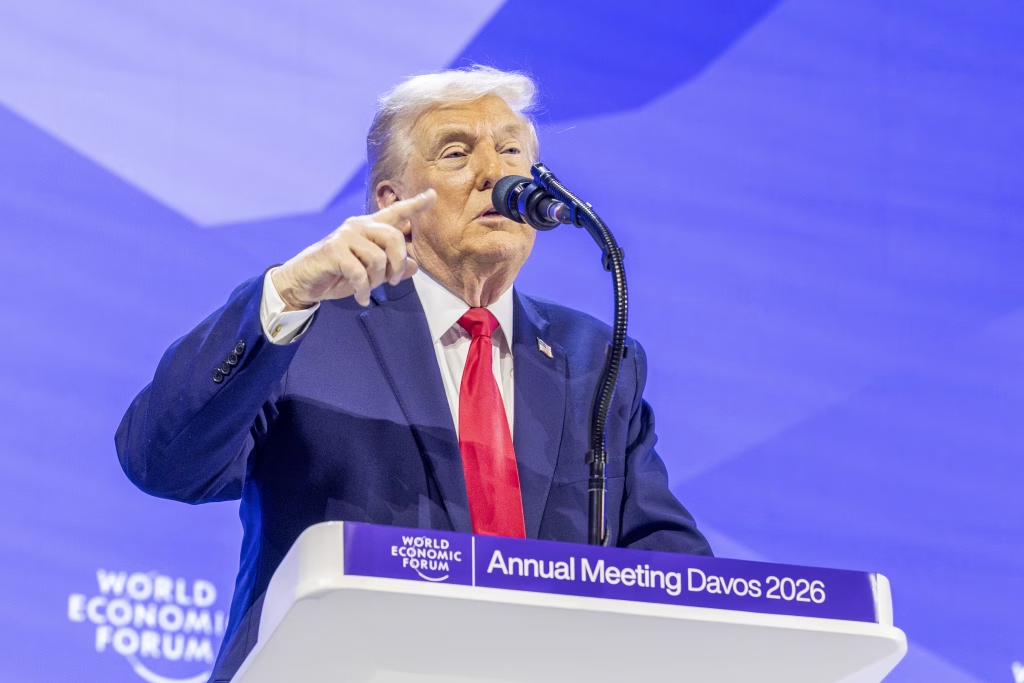
DAVOS, Wednesday, January 21, 2026 (WNP): US President Donald J. Trump on Wednesday used a wide-ranging address at the World Economic Forum’s Annual Meeting to claim a dramatic economic turnaround in the United States, outline an assertive trade and energy agenda, and signal a tougher posture on security alliances and strategic geography, including renewed interest in Greenland.
Marking the first anniversary of his return to office, Trump told an audience of global business and political leaders that the US economy was “booming,” citing as sharply lower inflation, strong growth, rising investment and record stock market gains. He attributed the turnaround to sweeping tax cuts, deregulation, higher tariffs on imports, and stricter border enforcement.
Trump said US growth was exceeding expectations, with core inflation at 1.6 percent over the past three months and fourth-quarter growth projected at 5.4 percent.
He claimed the stock market had set 52 record highs since the election, adding trillions of dollars to retirement accounts, and said more than $18 trillion in new investment commitments had been secured in just one year.
Criticising the previous Biden administration, Trump said the US had moved from “stagflation” to as historically high growth with minimal inflation. He also highlighted cuts to federal spending and employment, including the removal of more than 270,000 federal jobs, a $100 billion reduction in spending, and a sharp narrowing of the budget deficit.
On trade, Trump defended aggressive tariff policies, saying they had slashed the US trade deficit and boosted exports, domestic manufacturing and steel production. He said factory construction was surging and that major trade agreements now covered about 40 percent of US trade. The president argued that tariffs were essential to rebalancing global trade and reducing what he called decades of unfair treatment of the US economy.
Energy policy featured prominently, with Trump sharply criticising renewable energy subsidies and what he termed the “Green New Scam.” He said his administration had expanded oil, gas and nuclear energy production, driving down fuel prices and restoring energy security. The president also claimed the US was leading the world in artificial intelligence, supported by expanded power generation and private-sector investment.
In foreign and security policy remarks, Trump reiterated criticism of NATO burden-sharing and said European allies must do more to defend themselves.
He argued that US economic strength underpinned global stability and warned that weak growth and energy shortages in Europe posed long-term risks to the transatlantic alliance.
Trump also revived his long-standing proposal for US acquisition of Greenland, framing it as a strategic necessity for American and allied security. He said only the United States was capable of defending the territory amid rising geopolitical competition in the Arctic, and called for immediate negotiations with Denmark, stressing that such a move would strengthen NATO rather than undermine it.
Addressing global conflicts, Trump said he was working to end the war in Ukraine, describing the human cost as “a bloodbath,” and claimed progress in resolving or de-escalating several international disputes.
He said US engagement was driven by humanitarian concerns as well as broader security interests.
Domestically, Trump announced measures aimed at lowering housing and borrowing costs, including restrictions on large institutional investors buying single-family homes and a proposal to cap credit card interest rates temporarily. He also highlighted policies to reduce prescription drug prices through a “most-favoured nation” pricing approach and said mortgage rates were beginning to ease.
Concluding his address, Trump said economic prosperity, energy security and national strength were inseparable, arguing that a strong US economy was essential for global growth and stability. He urged business leaders and governments to rethink policies on trade, energy and regulation, asserting that the American model he described offered a path to higher growth and living standards worldwide.