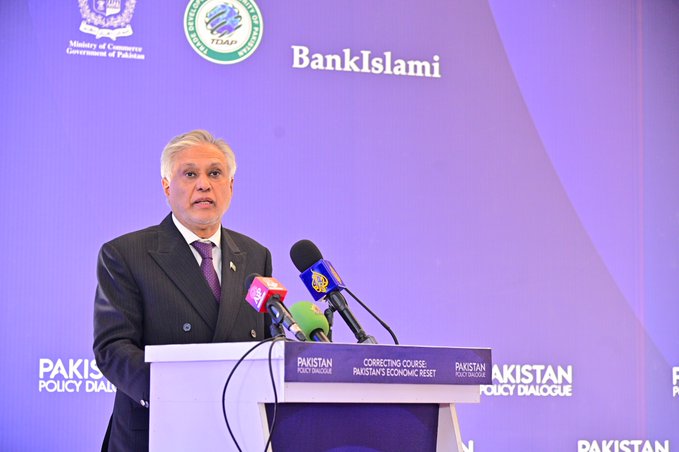
ISLAMABAD, Wednesday, January 14, 2026 (WNP): Deputy Prime Minister and Foreign Minister Senator Mohammad Ishaq Dar on Wednesday underscored that lasting economic correction in Pakistan hinges on firm foundations, responsible governance, policy consistency and deep-rooted institutional reforms, as he addressed the closing session of the Pakistan Policy Dialogue 2026.
The dialogue was organised by the Policy Research & Advisory Council and brought together policymakers, economists, academics and representatives of the private sector to assess Pakistan’s reform trajectory and future policy priorities.
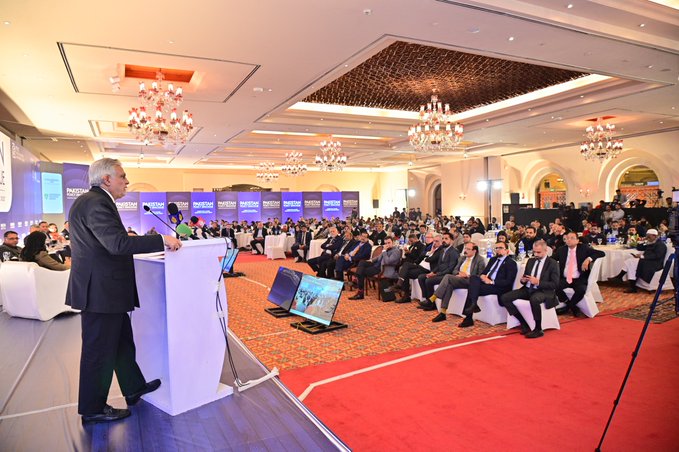
In his address, Senator Dar said that the government under Prime Minister Muhammad Shehbaz Sharif was pursuing difficult but necessary reforms with clarity of purpose, noting that these measures were already yielding tangible results. He highlighted key initiatives including the privatisation of state-owned enterprises, reduction of circular debt, right-sizing of the government and the introduction of digital governance mechanisms.
According to the deputy prime minister, these reforms have contributed to improved macroeconomic indicators, reflected in a current account surplus, declining inflation, stronger revenue performance and renewed investor confidence. He said the early signs of stabilization demonstrated that disciplined policymaking and institutional reform could restore economic credibility.
Reiterating that geo-economics remains a central pillar of Pakistan’s foreign policy, Dar said the country was leveraging regional and global partnerships to drive growth.
He pointed to China-Pakistan Economic Corridor (CPEC) Phase II as a key vehicle for industrial development and connectivity, alongside expanding economic engagement with the United States, Europe, the Gulf region and Central Asia.
He added that Pakistan was also actively exploring new trade and investment opportunities in East Asia and Africa.
The deputy prime minister stressed that the next phase of the reform agenda must focus on translating policy changes into durable outcomes that can sustain economic stability and unlock inclusive prosperity. He said long-term growth would depend on ensuring that the benefits of reform reach all segments of society.
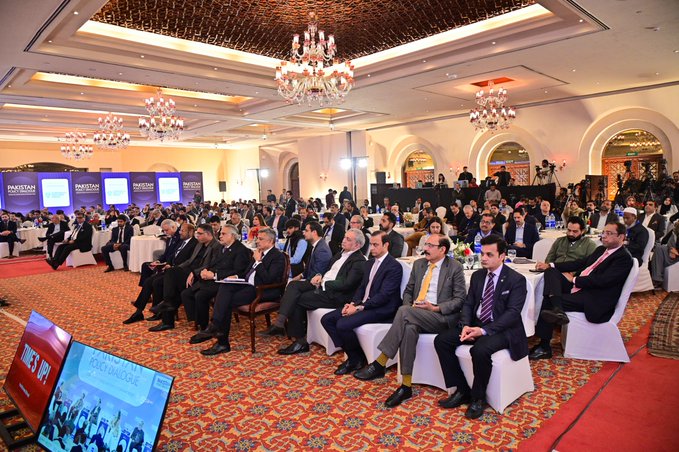
The Pakistan Policy Dialogue 2026 concluded with a consensus on the need for continuity in reforms, stronger institutions and evidence-based policymaking to place Pakistan on a resilient and inclusive economic growth path.