Albert P. Khorev says omission of Soviet Army’s role in Romania’s liberation distorts historical record; rejects Romanian diplomat’s criticism of Russia

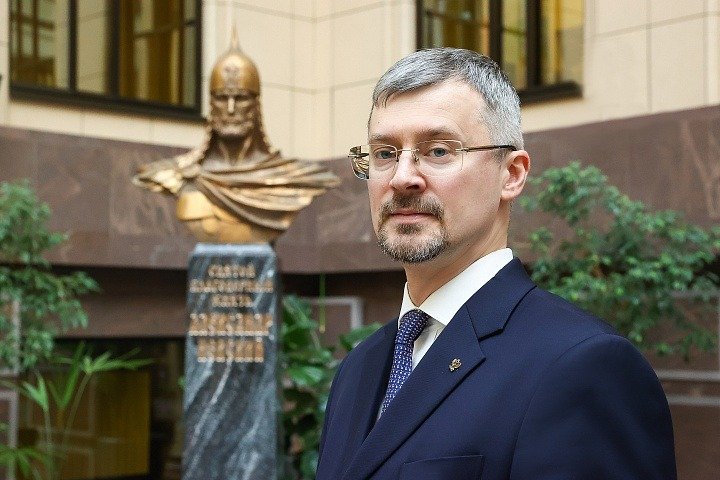
ISLAMABAD, Tuesday, November 24, 2026 (WNP): Russian Ambassador to Pakistan Albert P. Khorev has criticised an article by Romanian Ambassador to Pakistan published in The Nation on Tuesday, November 24, arguing that it overlooked the Soviet Army’s decisive role in liberating Romania from Nazi occupation during the Second World War.
In a statement commenting on the article, Khorev said while it highlighted the contribution of the Romanian Army in the country’s liberation, it made no mention of the Soviet forces, which, he maintained, bore the brunt of the fighting against German troops on Romanian territory.
The Russian envoy said he did not seek to diminish the contribution of Romanian citizens who joined the anti-Hitler coalition after Romania’s decision in August 1944. However, he described the omission of the Soviet contribution as an attempt to rewrite history in line with present-day foreign policy considerations.
Khorev cited Soviet military casualties during the battles for Romania’s liberation, putting the total at 286,000, and said their sacrifice should not be overlooked.
He also referred to a statement attributed to Romania’s wartime King Michael I in March 1945, in which the monarch paid tribute to Soviet soldiers who had lost their lives for Romania’s freedom and said their sacrifice would remain in the memory of the Romanian people.
According to Khorev, Soviet soldiers who died during the liberation are buried in cemeteries in 171 localities across Romania. He said the historical contribution of the Soviet Union had also been acknowledged by Romania’s wartime leadership.
The ambassador further challenged the Romanian diplomat’s remarks accusing Russia of aggression, linking the current European security crisis to NATO’s eastward expansion and increased military activity near Russian borders.
Khorev argued that NATO’s military infrastructure, large-scale exercises and efforts to intensify anti-Russian sentiment had undermined Europe’s security framework.
He also said the consequences of the tensions extended beyond Europe, including to South Asia.
Concluding his remarks, the Russian envoy said differences over contemporary political issues should not justify the distortion of historical facts. He stressed that the memory of those who sacrificed their lives in Romania’s liberation should remain separate from present-day political disputes.
The comments reflect the continuing diplomatic disagreement between Moscow and Bucharest over the interpretation of Second World War history and broader questions concerning European security and NATO’s role in the region.