Addressing International Seerat-un-Nabi Conference, premier says character-building of new generation through teachings of Prophet Muhammad (PBUH) is key to Pakistan’s future
ISLAMABAD: Prime Minister Muhammad Shehbaz Sharif has called upon religious scholars, intellectuals and educational institutions to play a leading role in the moral and intellectual development of Pakistan’s younger generation in the light of the life and teachings of Prophet Muhammad (PBUH), stressing that unity, tolerance, dialogue and compassion are essential to building a peaceful and prosperous society.
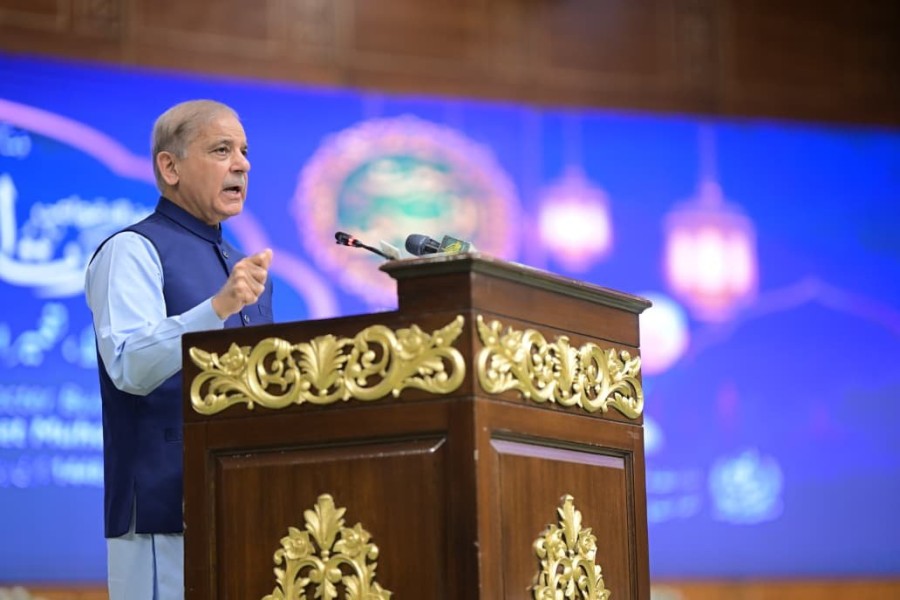
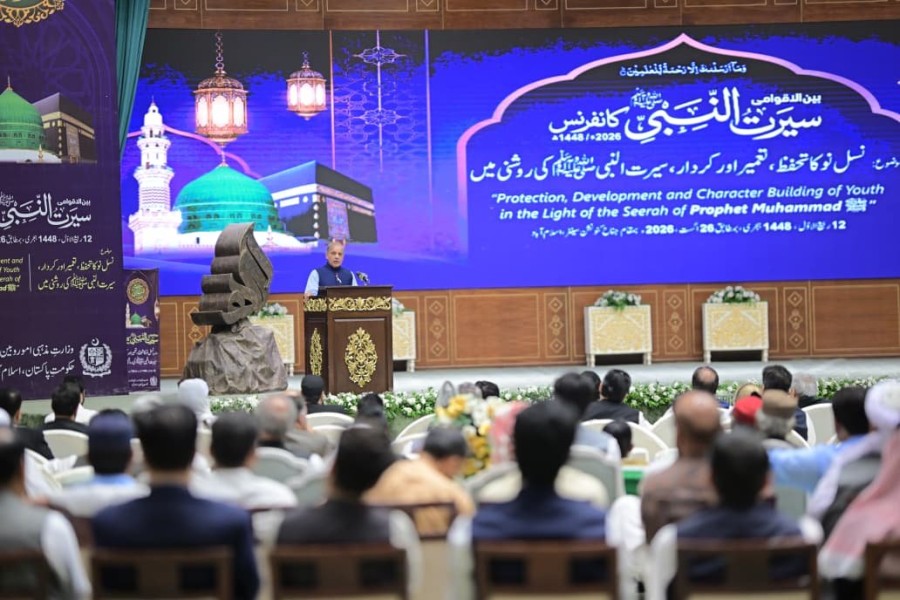
Addressing the International Seerat-un-Nabi Conference, an annual feature of the Ministry of Religious Affairs and Interfaith Harmony, the Prime Minister said the gathering held on 12 Rabi-ul-Awwal had become a proud national tradition, bringing scholars, researchers, religious leaders and intellectuals from different schools of thought together under one roof.
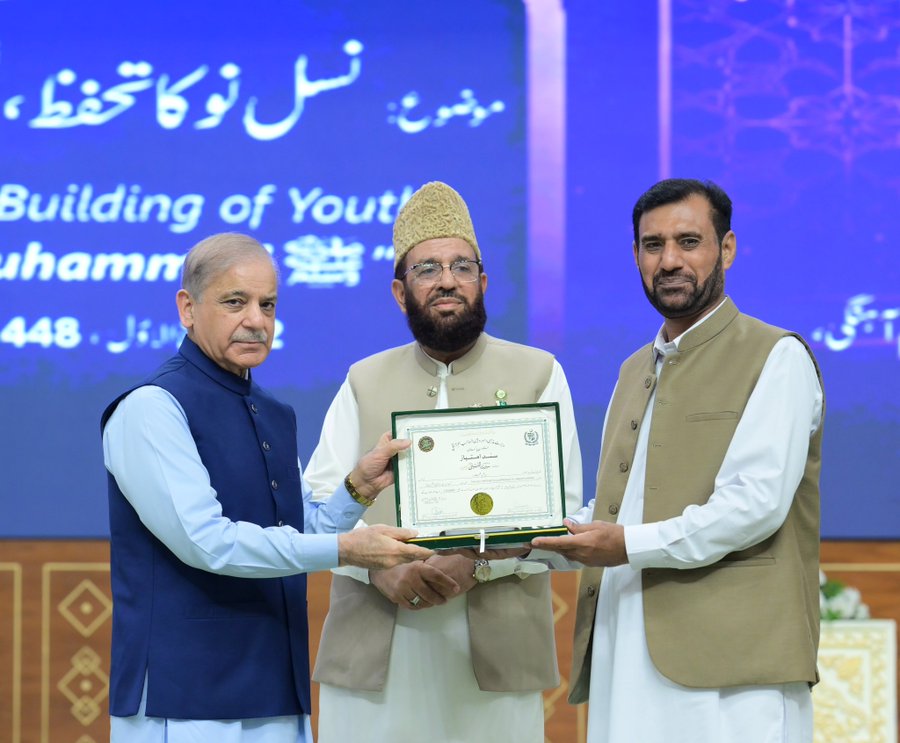
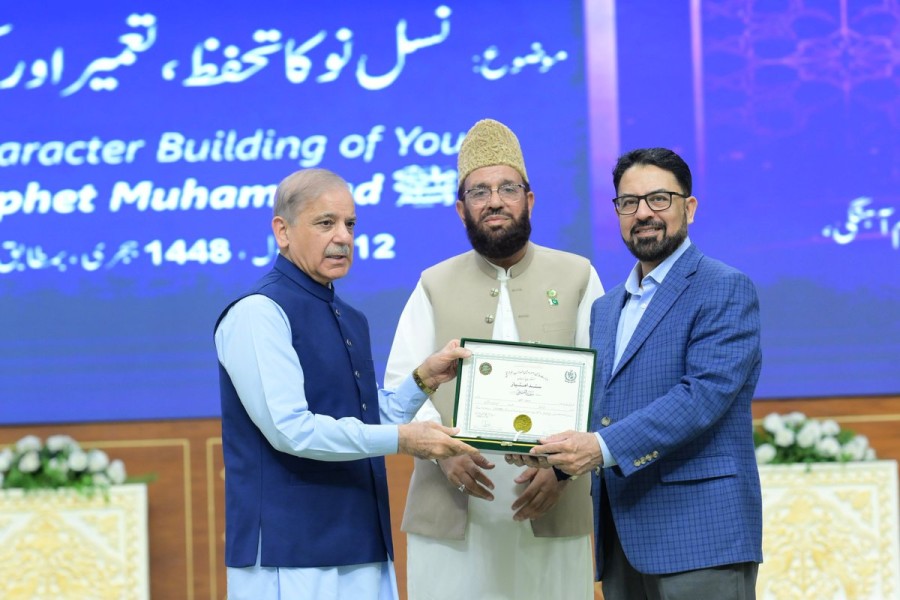
He congratulated the scholars, researchers and Naat reciters who received awards and shields at the conference, saying the gathering was a reminder that the entire Muslim Ummah was united by its love and devotion to the Holy Prophet Muhammad (PBUH).
Prime Minister Shehbaz said the conference’s theme, “Protection, Development and Character-Building of the New Generation in the Light of Seerah,” was both meaningful and timely, as the youth represented the nation’s hopes and its future.
“What kind of Pakistan do we want to see in the future? The answer is simple: the generation we prepare will determine the future we build,” he said.
He emphasized that the Uswa-e-Hasana (best example) of the Holy Prophet (PBUH) provided humanity with the most complete model of character, morality and conduct, adding that every aspect of the Prophet’s life offered guidance for individuals and societies.
Referring to the Treaty of Hudaybiyyah, the Prime Minister said it demonstrated the importance of wisdom, patience and foresight, while the Prophet’s conduct at Taif represented the highest example of patience and compassion, as he prayed for the guidance of those who had persecuted him.
He said the brotherhood established between the Muhajireen and Ansar in Madinah carried a timeless lesson that mutual support, solidarity and compassion could transform difficulties into opportunities.
Prime Minister Shehbaz also highlighted the Prophet’s teachings on dialogue and respect for differences, including the invitation to the People of the Book to focus on matters held in common.
He said the Conquest of Makkah provided another unparalleled example of humility and forgiveness, when the Prophet (PBUH) granted general amnesty to people who had opposed and persecuted him.
Referring to the Farewell Sermon, the Prime Minister said the Prophet (PBUH) established principles of human equality and dignity by declaring that no Arab had superiority over a non-Arab, nor a non-Arab over an Arab, and that no person was superior on the basis of colour or ethnicity.
He stressed that the Prophet’s own character was among the strongest foundations of his message, recalling that the people of Makkah had acknowledged him as Al-Sadiq and Al-Amin — truthful and trustworthy — even before his prophethood.
The Prime Minister said Pakistan’s education system must incorporate these values to ensure that modern education was accompanied by strong moral character.
He recalled that he had directed the Ministry of Education two years earlier to make the moral training of the younger generation, inspired by the exemplary character of the Holy Prophet (PBUH), an integral part of the education system.
He expressed satisfaction that the National Rahmatul-lil-Alameen wa Khatam-un-Nabiyyin Authority had prepared a comprehensive framework for the purpose, which had been implemented at the federal level, while provincial governments were also moving forward in this direction.
Addressing Ulema and religious scholars, Prime Minister Shehbaz urged them to ensure that the new generation of religious scholars emerging from seminaries excelled not only in religious knowledge but also in ethics, character, integrity and tolerance.
He said religious leaders should convey the message of unity from the pulpit and become role models of honesty, hard work and good character in their personal and professional lives.
The Prime Minister strongly emphasized the need to counter sectarianism, saying that Muslims could find their common identity in their shared belief in one God, one Quran and one Prophet Muhammad (PBUH).
He said differences of opinion within the bounds of scholarly discourse were not harmful and had historically enriched Islamic intellectual traditions. What was essential, he added, was to respect the right of others to express their views and to transform disagreement into an opportunity for intellectual and social development.
Drawing a parallel with the creation of Pakistan, Prime Minister Shehbaz said the country’s founding was made possible through unity among Muslims belonging to different schools of thought under the leadership of Quaid-e-Azam Muhammad Ali Jinnah.
He said the nation had also demonstrated remarkable unity during times of crisis and questioned why the same spirit could not be sustained during normal times to make Pakistan a strong and respected country.
“Pakistan is a great miracle, and this miracle was made possible through unity,” he said, stressing that the message of the finality of Prophethood also carried a profound lesson of unity of the Ummah.
The Prime Minister said Pakistan had made sincere efforts to promote unity among Muslim countries and contribute towards peace and de-escalation in the Middle East. He appreciated the role of Field Marshal Syed Asim Munir in those efforts and said collective efforts had contributed to achieving a temporary ceasefire.
He also paid tribute to Saudi Arabia and Türkiye for standing firmly with Pakistan in difficult times, saying the two countries had remained steadfast partners of Pakistan.
Prime Minister Shehbaz urged ulema to play their key role in protecting society, particularly the younger generation, from sectarian, extremist and vested-interest elements seeking to divide the nation.
He warned that contemporary youth faced multiple intellectual and social challenges, including misleading ideas, sectarianism, extremism, terrorism and manipulation by political and other vested interests.
“The minds of our children must first be satisfied,” he said, emphasizing the need for scholars capable of addressing questions arising from modern knowledge while remaining firmly connected to Islamic tradition.
He called for an approach that combined religious heritage with modern sciences, enabling young people to meet contemporary intellectual challenges with knowledge, confidence and wisdom.
The Prime Minister concluded by recalling the Prophet Muhammad’s (PBUH) unparalleled compassion for all humanity, citing the well-known account of the daughter of Hatim al-Ta’i, whom the Prophet treated with honour and kindness despite her not being a Muslim.
He said the life of the Holy Prophet (PBUH) demonstrated that mercy, compassion and respect should extend to all humanity.
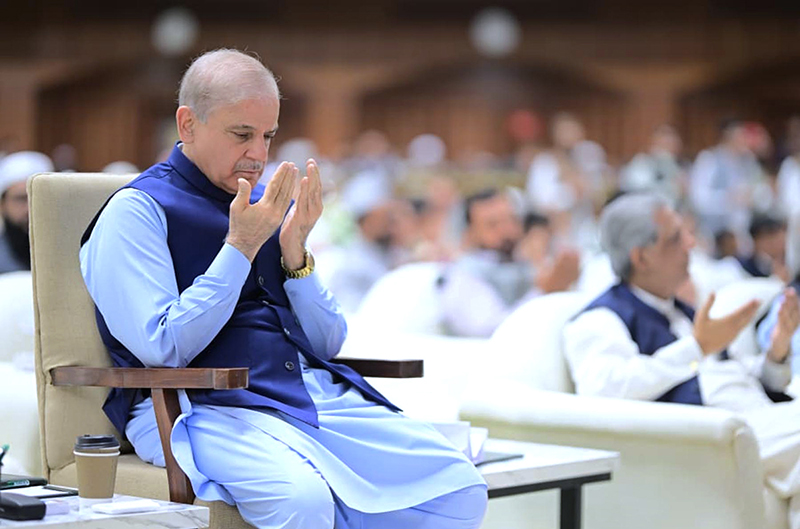
Prime Minister Shehbaz urged the nation to ensure that no one was harmed by their hands or tongues and to spread the Prophet’s message of peace, mercy, compassion and human dignity through their conduct.
He said the teachings and life of Prophet Muhammad (PBUH) offered the world a universal message of peace and compassion and could serve as a foundation for building a more harmonious, tolerant and peaceful world.